
Choose the right tray for a taller rise
The best Yorkshire pudding tin is not necessarily the one with the grandest name or the darkest non-stick coating. It is the tin that gets properly hot, holds that heat when cold batter lands, gives the sides room to climb and releases the finished puddings without tearing away the crisp base.
For my two-time champion Yorkshire pudding recipe, I use a deep six-hole tray. The depth helps create the tall sides and generous hollow I want for gravy, while six holes are practical for a smaller household or a double batch in two matching trays. That does not make every other format wrong. A shallow four-hole tin, a deeper muffin tin, a twelve-hole tray and a roasting tin each create a different sort of Yorkshire pudding, so the best choice depends on what you actually want to serve.
My Yorkshire pudding tin
The exact tray linked from my champion recipe is the Lakeland six-hole deep Yorkshire pudding tray. Lakeland describes it as a two-layer non-stick tray with sure-grip handles that is oven-safe up to 240°C. The deep wells suit the tall individual style shown in the flagship recipe, and the extended handles are useful when the tin contains very hot fat.
That is the tin I use. The other shopping options below are selected by their published specifications and format; they are not presented as winners from a side-by-side product test. Similar-looking trays can differ in well size, weight and coating. If you already own a solid deep tray that heats evenly and releases cleanly, you do not need to replace it for the sake of a logo. If your current tin flexes when lifted, cools the moment the batter goes in or leaves every base welded to the metal, that is when a better tray earns its cupboard space.
Yorkshire pudding tin formats at a glance
| Format | Useful for | What to check |
|---|---|---|
| Deep six-hole tray | Tall individual puddings with a generous hollow | Well depth, batter quantity and maximum oven temperature |
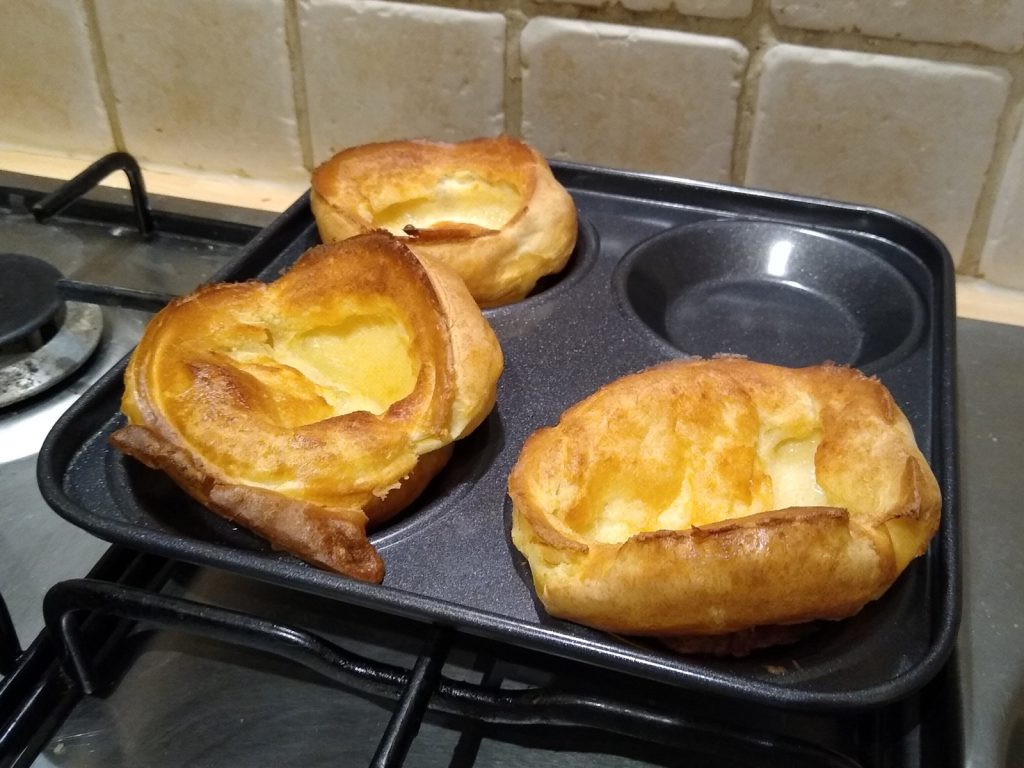
| Shallow four-hole tin | Broad individual puddings and smaller batches | Diameter of each well and whether the batter fits without overflowing |
| Muffin or twelve-hole tray | Smaller portions or more puddings in one batch | Actual well dimensions; twelve holes alone tell you little about depth |
| Single roasting tin | One large Yorkshire pudding to share or fill | A suitable recipe quantity, sturdy handles and room in the oven |
Yorkshire pudding tins to consider
For a broad, shallow pudding: MasterClass four-hole pan
Harts of Stur lists this 24cm pan with four wells measuring 10cm across and 2cm deep, and a non-stick finish. The dimensions make it a useful example of the broad, shallow format. Check the current temperature and care instructions before using it with your recipe.
View the MasterClass four-hole Yorkshire pudding pan
For six individual puddings: Mermaid by Samuel Groves
This six-hole tray is made from hard-anodised aluminium. The retailer lists it as made in Britain, oven-safe to 240°C and suitable for hand washing. It is a different tray from my deep Lakeland tin: compare the well dimensions and the shape you want before choosing.
View the Mermaid six-hole Yorkshire pudding tray
Compare the current Yorkshire pudding tin range at Harts of Stur. Check stock, dimensions, delivery costs and the manufacturer’s maximum temperature before ordering. Prices and availability can change.
Deep tin or shallow tin?
Well depth and width help shape the finished pudding, but batter quantity, temperature and technique also matter. A deeper well gives the batter room to form tall sides; a broad, shallow well gives more room for a wide rim. Do not assume the number of holes tells you how large or deep the puddings will be. Neither is automatically better; the important point is to match the recipe quantity and cooking time to the shape.
If you pour a deep-tin quantity into a shallow bun tray, the batter may overflow or join its neighbours. If you barely cover the base of a deep well, it may set before it builds height. For the champion recipe, fill the wells between halfway and three-quarters full once the tin and fat are thoroughly preheated, following the recipe and the tray’s temperature limit. That gives the batter enough volume to rise without creating a new architectural feature on the roof of your oven.
Metal, cast iron or silicone?
A sturdy metal tray is the most versatile everyday choice. Carbon steel and heavier-gauge steel heat quickly, retain enough heat for the initial rise and are light enough to move safely. A dark surface can brown the bases efficiently, although very dark thin metal can also colour the outside before the centre is ready. Weight and rigidity matter more than marketing language: the tray should not twist when you lift it with one hand at each end.
Cast iron stores heat brilliantly and can produce deeply crisp edges, but it is heavy and slower to preheat. It makes sense for a giant Yorkshire pudding or a cook who already likes using cast iron, rather than someone who wants twelve individual pudds while also moving three other roasting trays. Seasoning and handling also require more attention than an ordinary coated steel tray.
Silicone is flexible and can fit some smaller appliances, but it transfers heat differently from metal. It is not my first choice for an oven-baked Yorkshire pudding. If you use it, check the temperature rating and the appliance instructions, and support the mould properly before adding fat or batter. Never move unsupported flexible cups full of hot fat.
Does non-stick coating matter?
A sound non-stick coating makes release easier, particularly when a pudding has climbed high and left a delicate crisp edge around the well. It is not a substitute for hot fat. Even the best coating will not rescue batter poured into a cool tray, while a properly heated, lightly greased uncoated tin can perform well in experienced hands.
Protect the coating by avoiding metal knives and abrasive cleaning pads. Once the surface is scratched, peeling or persistently sticky, replace the tray rather than seasoning each batch with fragments of its former personality. Follow the manufacturer’s maximum temperature and care instructions, especially because some Yorkshire pudding recipes push ovens close to their hottest setting.
What size Yorkshire pudding tin should you buy?
Start with the number and style you normally serve. A six-hole deep tray is a useful all-rounder for tall pudds and a small household. Two matching six-hole trays give you twelve with consistent dimensions. A twelve-hole bun or muffin tray can be useful for parties, with portion size determined by the individual wells. A four-hole tray produces broad individual puddings with plenty of room for gravy, while one deep roasting tin is the route to a giant Yorkshire pudding that becomes part of the meal rather than an accompaniment.
Measure the oven shelf, air-fryer drawer and cupboard before ordering. Include the handles in the measurement, because a beautifully engineered tray is less impressive when the oven door will not close. For an air fryer, check the flat internal base rather than the widest point at the top of the drawer.
Why a muffin tin is not quite the same
A muffin tin can make good Yorkshire puddings and is far better than buying another object if your existing one is sturdy. Muffin wells are often narrower and deeper, producing a taller but more compact pudding. Purpose-made Yorkshire pudding trays tend to have wider wells that encourage a broad crisp rim and a larger centre for gravy.
If you are using a muffin tin, reduce the amount of batter in each hole and watch the later stage of the bake. The deeper centre can take longer to set. Do not fill every empty hole with water, a piece of advice that circulates online but introduces unnecessary steam beside a food you are trying to crisp.
How to stop Yorkshire puddings sticking to the tin
Use a clean tray, add a modest amount of fat and preheat it until the fat is shimmering. Pour the batter swiftly and return the tray to the oven before the metal cools. Once baked, leave the puddings for only a minute before lifting them out with a silicone or wooden utensil. If they cool completely in the wells, the fat and batter can grip as they contract.
Persistent sticking often means the coating is worn, the fat was not hot enough or sugary residue from another bake remains on the tray. A Yorkshire pudding tin is not the place for last week’s caramelised muffin edges. Clean it according to the manufacturer’s instructions and keep one dependable tray for savoury baking if you make pudds regularly.
Can the tin really change the rise?
Yes, but it works with the batter and heat rather than replacing them. The initial rise comes from steam expanding inside the batter while the hot fat and metal set the outer structure. A heavy, preheated tin loses less temperature when the batter lands, giving that steam a stronger start. A flimsy tray can cool quickly or flex as it is moved, but even the finest tin cannot compensate for thick batter, lukewarm fat or an oven door opened during the rise.
For the complete method, including batter consistency and oven temperature, use the award-winning Yorkshire pudding recipe. If you are cooking ahead for a roast, see how to freeze and reheat Yorkshire puddings for the cooling, storage and reheating method.
My verdict
For tall, crisp individual puddings, buy a rigid deep metal tray with wells large enough to fill between halfway and three-quarters, handles you can grip safely and a temperature rating that matches your recipe. The six-hole Lakeland tray is the exact format I use with the champion batter. Choose a different format when the meal calls for it, but do not sacrifice heat retention and safe handling for a tray that merely looks impressive in a product photograph.
Featured photograph: Alex Liivet, via Wikimedia Commons, CC0 public-domain dedication. Resized and compressed for the web. The photograph illustrates the four-hole format.

Affiliate disclosure: This article contains affiliate links to Harts of Stur. If you buy through these links, Yorkshire Pudd may earn a commission at no extra cost to you.