
Plan a Smoother Leeds Home Clearance
Anyone who has lived through a loft conversion in Headingley or finally cleared a cellar in Chapel Allerton will tell you the same thing: the waste is always worse than you planned for. Leeds is a city of Victorian terraces, back-to-backs and 1930s semis, and every one of them hides more rubble, more old carpet and more mystery boxes than you would ever guess from the outside.
Sorting the disposal before you start makes the whole job calmer. Comparing options for skip hire in Leeds at the planning stage means the container arrives when the mess starts, not four days after your hallway has disappeared under bin bags. Prices vary more than most people expect, and services such as Rent-a-Skip let you compare what local operators charge before you commit to a size.
Why Leeds homes produce so much clearance waste
The city’s housing stock is a big part of it. Older properties mean lime plaster that comes off in sacks, floorboards that cannot be saved, and gardens with decades of accumulated sheds, slabs and shrubbery. Add the usual life admin, outgrown children’s furniture, a garage that has become a storage unit, the exercise bike that became a clothes rail, and even a modest declutter can fill a small skip surprisingly fast.
Room by room, keep it simple
The method that works is the boring one: one room at a time, four piles. Keep, donate, recycle, dispose. Leeds has excellent options for the middle two piles. Charity shops across the city take furniture in good condition, several reuse organisations collect white goods, and the council household waste recycling centres at Seacroft, Kirkstall and elsewhere take most materials if you have a car and the patience for a weekend queue.
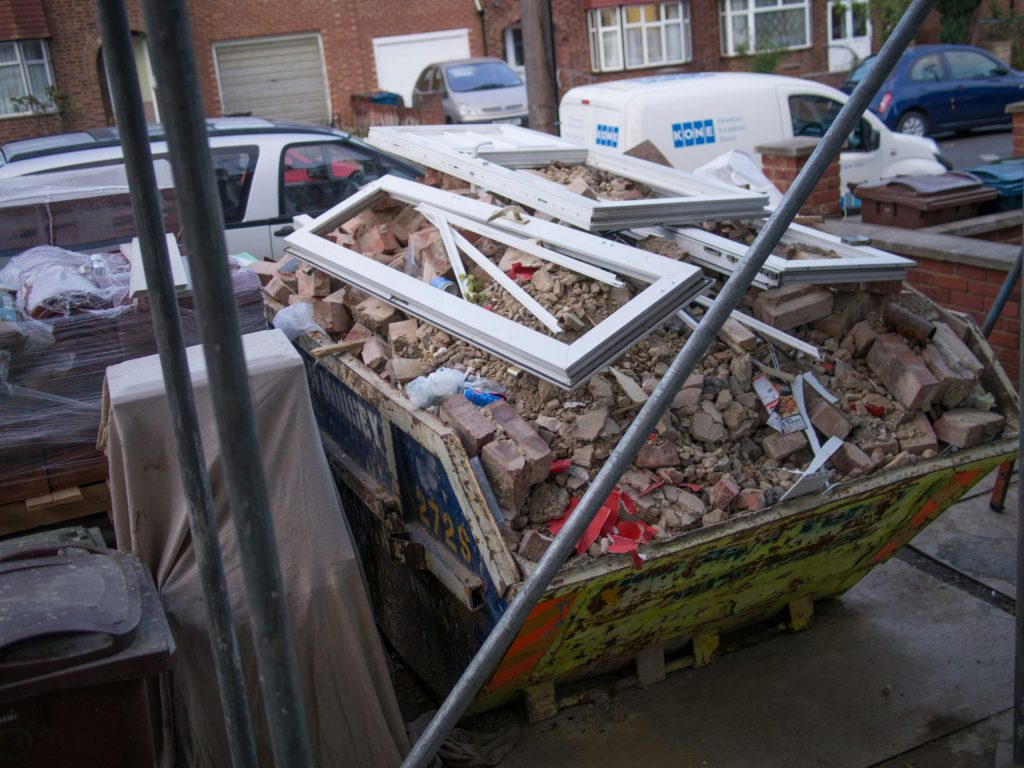
The dispose pile is where a skip earns its money. Broken furniture, old carpets, hacked-off plaster and rotten decking have no second life, and ferrying them to the tip a boot-load at a time costs more in fuel and Saturdays than most people admit.
Getting the skip right
Size matters more than anything else. A 4-yard midi suits a single-room refresh; a 6-yard builders skip handles a full house declutter or a kitchen rip-out; anything involving serious rubble should stay in a 6-yard or smaller anyway, because dense waste hits weight limits before it fills the container. If the skip has to sit on the road rather than a drive, Leeds City Council requires a permit, which the skip company usually arranges for you. On-street skips also need lamps overnight, so ask about that when booking.
A few local realities
Plasterboard has to be kept separate from general waste by law, so bag it as you strip it. Asbestos is a real possibility in pre-2000 textured ceilings and garage roofs across the city, and it needs a licensed removal route, never a skip. And if someone with a van offers to make your waste disappear for cash, ask for their waste carrier registration: if your rubbish turns up fly-tipped in a lay-by off the ring road, the fine lands on you, not them.
None of this is complicated. Plan the waste like you plan the paint colours, book the skip before the crowbar comes out, and the project stays a renovation rather than a slow-motion argument with your own hallway.
What it costs and how to keep the bill down
Prices in Leeds sit a little below the national average for most skip sizes, but the spread between operators can still be wide, which is why comparing two or three quotes is always worth ten minutes of your time. The habits that keep costs down are simple. Break furniture flat before it goes in, load heavy items first and fill gaps with the light stuff, and never let the load rise above the rim, because drivers are entitled to refuse an overloaded skip and a wasted journey still gets charged. If you only have a modest amount of genuinely heavy material, a smaller skip loaded well nearly always beats a bigger one loaded lazily.
Garden clearances deserve their own plan
Yorkshire gardens generate a particular kind of chaos: turf, soil, hedge trimmings, rotten fence panels and the remains of whatever the previous owner buried behind the shed. Soil and rubble are the heaviest things most households ever put in a skip, so mention them when you book and the firm will steer you to the right size. Green waste, on the other hand, often has a cheaper route through the council’s brown bin service or a compost heap, so a skip full of hedge clippings is usually money wasted. Sort first, book second, and the garden project stays enjoyable.