
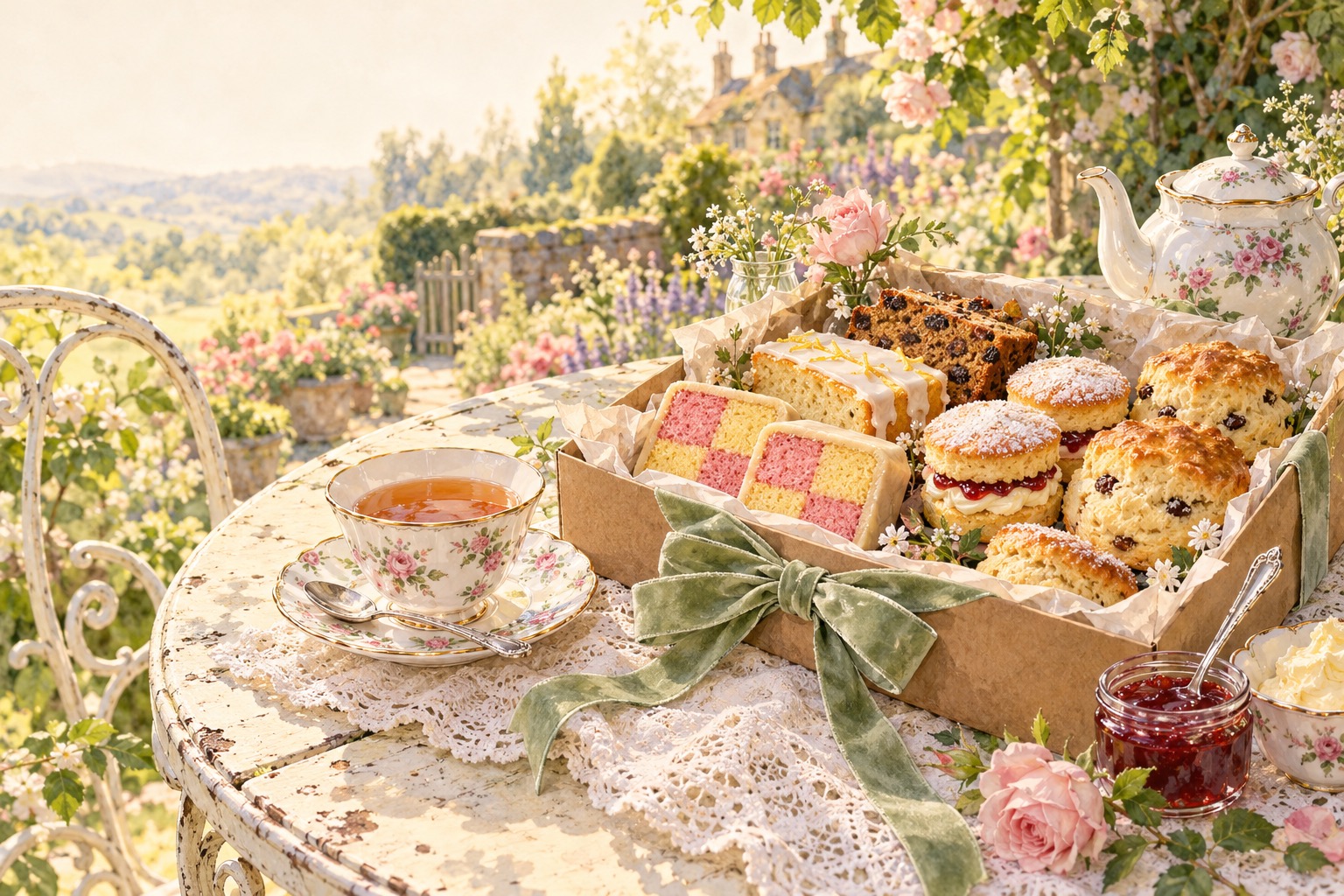
A homemade afternoon tea looks effortless on the kitchen counter, scones cooling on a wire rack, jam glistening in a jar, a loaf cake still warm from the oven. The real test comes later, once everything’s been boxed, jostled in a car boot or carried through a letterbox, and finally opened by someone who’s expecting a little luxury. A cake box that arrives bruised, soggy or collapsed undoes all that early effort, no matter how good it tasted an hour after baking.
Building a gift-worthy tea hamper is as much about engineering as it is about flavour. You’re not just baking; you’re planning for movement, time and temperature, while still creating something that feels like a proper spread of afternoon tea. Get the balance right and you’ll send out a box that tastes as good as it looks, even after a day in transit. Get it wrong, and the prettiest bake can arrive as crumbs.
This guide walks through how to plan a cohesive flavour profile, choose bakes sturdy enough to survive the journey, handle scones and preserves correctly, package for both texture and appearance, and add the thoughtful finishing touches that turn a box of cakes into a proper gift.
Build the box around a flavour plan, not a random assortment
The biggest mistake in assembling a gift hamper is treating it like a clearance sale, a bit of everything, with no thought to how the flavours sit together. A stronger approach is to choose one coherent tea-time profile and build outward from it.
Think in terms of themes: citrus (lemon drizzle, orange shortbread, marmalade), spice (ginger loaf, cinnamon biscuits, spiced fruit cake), fruit (berry traybake, apple flapjack, raspberry jam), or chocolate (chocolate chip shortbread, cocoa loaf cake, chocolate-dipped biscuits). Sticking to one theme makes the box feel curated rather than cobbled together, and it also helps you balance sweetness and richness across the selection.
Resist the urge to overfill. Four or five well-chosen components, say, a loaf cake, a biscuit, a traybake, a jar of preserve and perhaps a packet of scones, give enough variety without overwhelming the recipient or your packaging. A smaller, thoughtfully edited box reads as more considered than a crowded one, and it’s considerably easier to pack securely.
Choose robust bakes that hold their shape
Not every bake is suited to a journey. Some hold up beautifully; others fall apart the moment the box tilts.
Loaf cake slices are a strong choice. Dense-crumbed cakes like lemon drizzle, banana loaf or gingerbread keep their shape well and often taste better a day or two after baking, once the flavours have settled. Shortbread, biscuits and flapjacks are similarly reliable: they’re designed to be sturdy, they don’t bruise, and they can handle a bit of jostling without losing their structure. Firmer traybakes, like a classic Victoria sponge-style slice, also travel reasonably well if they’re not over-frosted.
Meringues, by contrast, are a poor candidate for shipping. They’re light, brittle and prone to shattering under even gentle pressure. Soft frostings, like whipped cream or delicate buttercream swirls, can smear or slide if the box isn’t kept level, and fragile decorations, sugar flowers, piped detail, anything with height, are easily knocked. If you want to include something more delicate, it needs extra reinforcement: firmer buttercream, a shallow compartment of its own, or simply leaving it out of the travelling box altogether and offering it only for local, hand-delivered gifts.
Treat scones, fillings and preserves differently
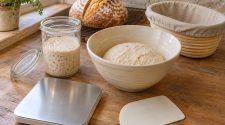
Scones deserve their own set of rules. They’re genuinely best eaten within a day of baking, when the outside still has a light crust and the inside is soft rather than dry. If a box needs to travel more than a day, consider including part-baked or freshly wrapped scones with clear instructions to warm them through on arrival, rather than baking them too far in advance and hoping they hold up.
Follow each preserve’s storage instructions. Homemade lemon curd needs refrigeration unless prepared using a validated shelf-stable process.
Cream fillings and dairy-based elements are the exception that needs real caution. Anything containing fresh cream, custard or soft cheese fillings needs to be kept chilled throughout transport, and the recipient should be told to refrigerate it immediately on arrival. If chilled transport isn’t practical, it’s often safer to leave cream fillings out of a posted box entirely and reserve them for bakes that are being delivered in person.
Package for texture, not only appearance
It’s tempting to focus packaging decisions purely on how the box looks when opened, but texture matters just as much as presentation. A beautifully arranged box is no good if the biscuits have gone soft by the time it arrives.
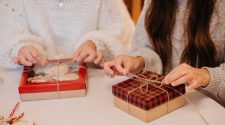
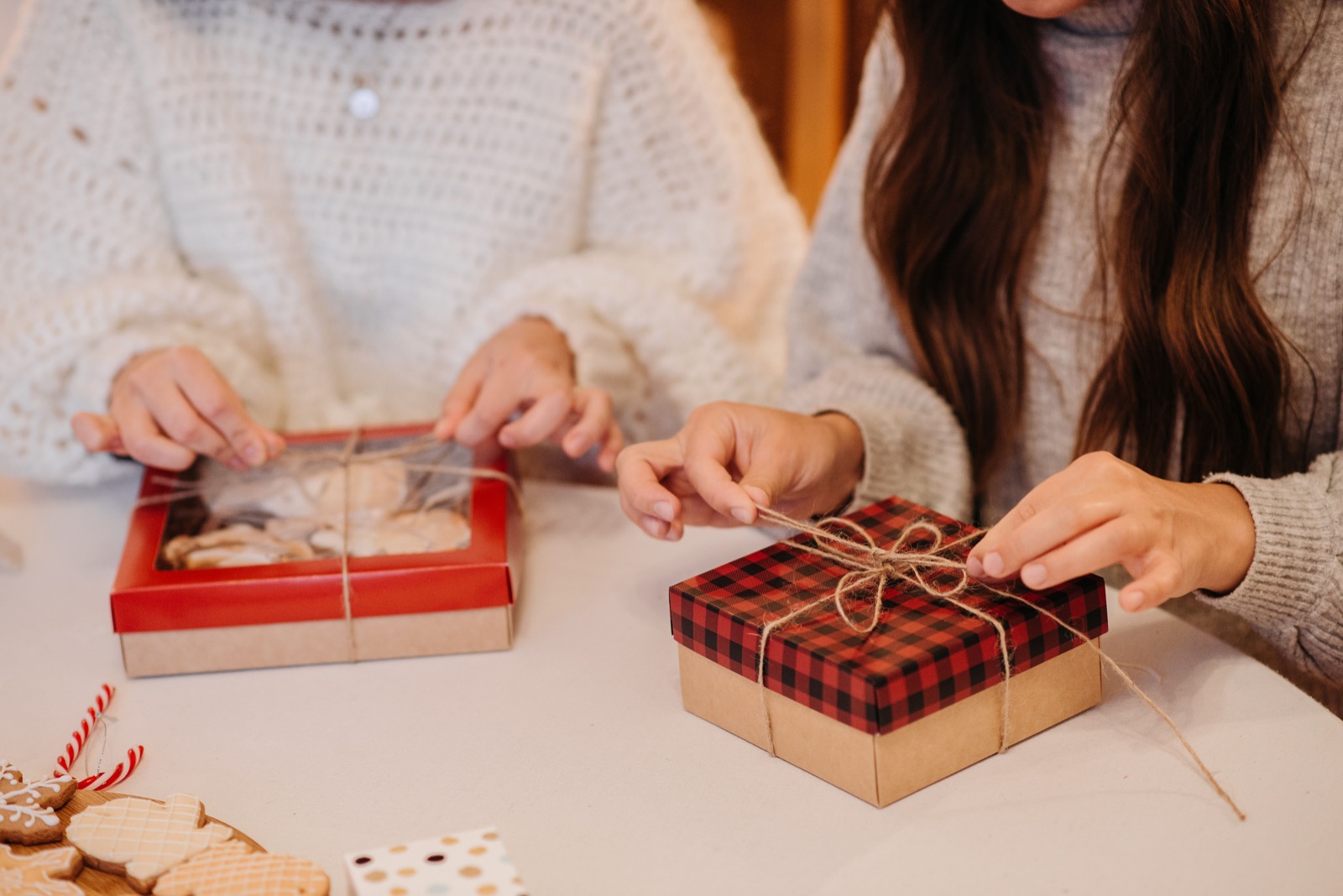
Use dividers to keep items from touching and transferring moisture or crumbs between one another. Food-safe wrapping, such as greaseproof paper or cellophane, protects individual items and keeps them fresh, while a rigid outer box prevents the whole thing from crushing under its own weight or anything stacked on top of it in transit. Padding, whether shredded paper, tissue, or a simple layer of bubble wrap around the box itself, absorbs the knocks of handling.
Crisp items and moist cakes should never share the same compartment. A shortbread biscuit placed directly against a slice of moist loaf cake will soften within hours, losing the contrast that made it appealing in the first place. Separate them with dividers or wrap each component individually.
Think about portion sizes too. Smaller, individually wrapped portions are easier to arrange securely and less likely to shift than one large piece. And if anything is iced or glazed, make sure it’s fully set before packing, otherwise you risk icing transfer onto the wrapping or neighbouring items.
Make it look like an afternoon tea experience
Once the practical questions are settled, it’s worth thinking about how the box feels to open. A good cake box should read as an experience, not just a collection of baked goods.
Vary the height of items within the box; a taller loaf cake slice alongside flatter biscuits and a squat jam jar creates visual interest rather than a flat, uniform layout. Colour contrast helps too: a pale lemon drizzle next to a darker ginger biscuit, or a bright berry jam against cream-coloured shortbread, makes the box feel considered rather than accidental.
Coordinated labels, even simple handwritten tags naming each item, add a sense of occasion and help the recipient know what they’re eating. Consider including a small tea pairing suggestion alongside the box; a note recommending Earl Grey with the citrus items, or a robust breakfast blend with the spiced fruit cake, elevates the whole gift. If you want to go a step further, suggest an order of serving, starting with the lightest, moving to the richest, mirroring how a proper afternoon tea is traditionally served.
For a simple six-item box, you might include: a loaf cake (four slices), a packet of four scones, a small jar of jam, a pack of shortbread biscuits, a flapjack square, and a tea pairing card. Each item gets its own compartment or wrapping, arranged by height, with the scones and jam positioned together so the recipient knows to pair them. At the end of the day, if hosting an afternoon tea party from scratch feels like too much work, you can always look at Regency Hampers, Virginia Hayward or Fortnum & Mason for ready-made cake hampers.
Add the practical details that make a gift thoughtful
The finishing touches are what separate a good cake box from a genuinely thoughtful one.
Allergen information should be included for every item, clearly listing any of the fourteen major allergens present, such as gluten, dairy, eggs or nuts. This matters even for small-scale or home gifting, since recipients may have allergies or intolerances that aren’t obvious from the outside of a wrapped item. For a clear overview of allergen responsibilities, the Food Standards Agency’s allergen guidance for food businesses is a useful reference, particularly if you’re moving from occasional home baking into selling boxes more formally.
It’s worth being clear about where the line sits: casual, one-off gifting to friends and family carries far lighter obligations than running a food business. If you start selling cake boxes regularly, even as a side venture, you take on formal labelling and allergen disclosure duties, and it’s worth checking current requirements before scaling up.
Beyond allergens, think about dietary needs more broadly, noting on the label if something is vegetarian, contains alcohol, or is suitable for those avoiding particular ingredients. Include simple storage instructions, for example, "best eaten within three days, keep in an airtight container", so the recipient knows how to look after their gift once it arrives. If any component needs refrigeration, make that instruction impossible to miss.
Finally, a short handwritten note goes a long way. A line suggesting how to serve the scones, which jam to try first, or simply a warm message marking the occasion, turns a box of baked goods into a genuine gift, the kind that feels personal even after a day in transit.
Bringing it all together
A gift-worthy afternoon tea cake box succeeds when flavour, structure and care are treated as equally important. Choose a coherent flavour theme, pick bakes that are sturdy enough to survive the journey, handle scones and preserves on their own terms, and package with both texture and appearance in mind. Add the human touches, a serving note, a tea pairing, clear allergen information, and you’ve got something that feels like a proper afternoon tea, however far it’s travelled.
The next time you’re assembling a cake box as a gift, start with the destination in mind rather than the ingredients. Ask yourself what the box needs to survive before you decide what goes in it, and the rest of the planning tends to fall into place.