
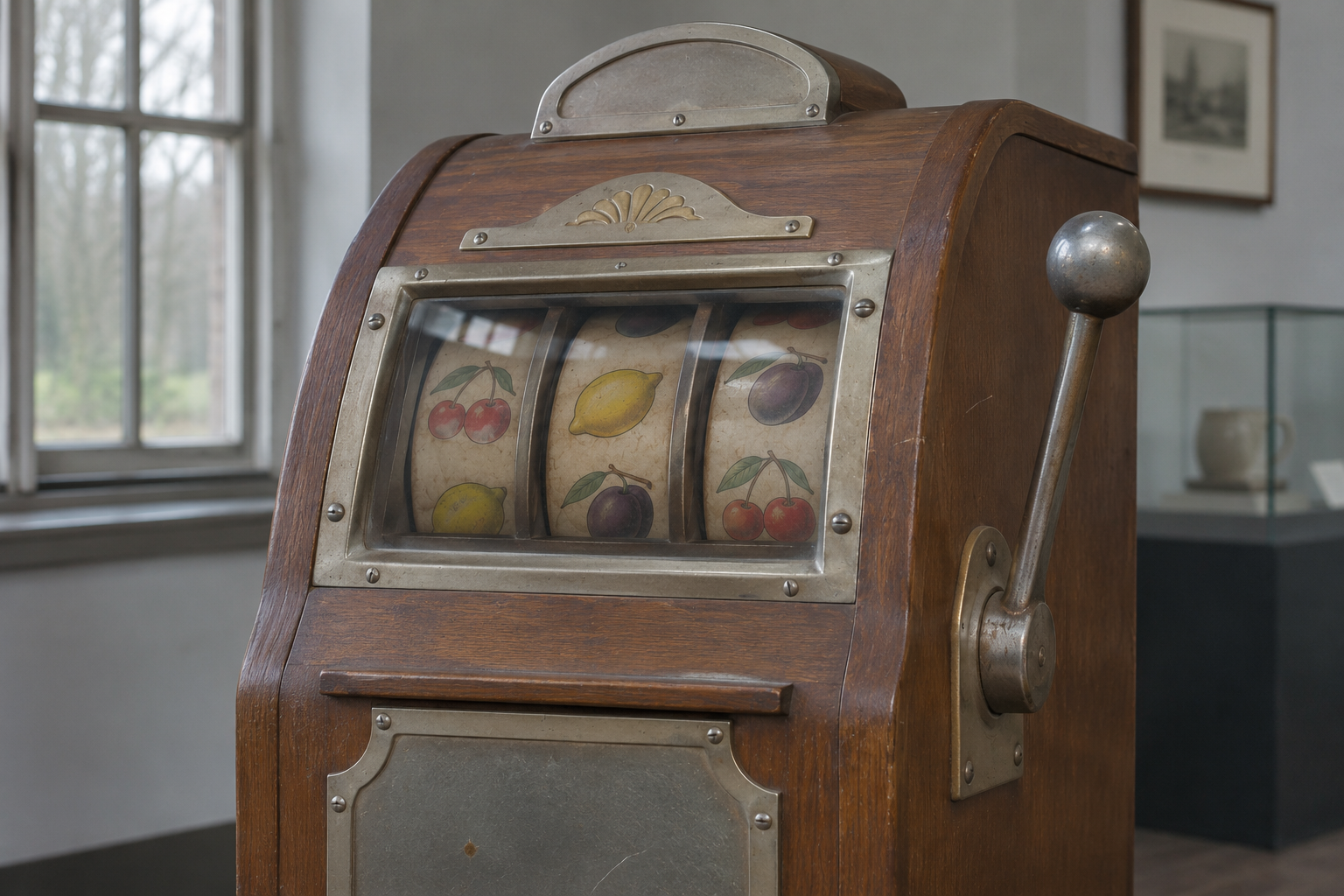
In 1907, Chicago-based Mills Bros. replaced playing card symbols with “cherries, lemons and plums” to get around anti-gambling laws, which were based on the idea that patrons would chew gum with the same flavor as the fruit on the machine. That legal nitty-gritty turned into a psychological design win that still prevails on digital gaming floors today.
Most historical reviews view fruit reels as little more than a nostalgic 19th-century item. The truth, however, emerges from the modern forums where players discuss these games—such as Reddit—and likely from the wider community that is playing them—the simplicity of the fruit symbols serves as high-contrast visual cues that minimize the cognitive burden on mobile screens in a crowded video slot market with complex 3D visuals. Understanding how casino slots turned candy flavors into enduring icons explains both gaming history and modern interface design.
Why Were Fruits Put on Slot Machines?
Fruits were added to slots to make them more genuine legal chewing gum vending machines than slots that pay out cash gambling.
The Nevada State Museum records state that in 1894, Charles Fey, a mechanic in San Francisco, invented the Liberty Bell, a mechanical machine that featured horseshoes, stars, and card suits on its three reels. As anti-gambling laws proliferated throughout American states at the turn of the century, machines that accepted cash payments were liable to confiscation. The Operator Bell was invented in 1907 by Herbert Mills of the Mills Novelty Company, and introduced in conjunction with the Bell-Fruit Gum Company, which supplied the fruit-flavored gums that matched the symbol that was landed. The company’s rectangular logo came to be known as the classic BAR icon.
|
Original Fruit Symbol |
Corresponding Gum Prize |
Modern Reel Tier |
|
Cherries |
Cherry-flavored chewing gum |
Low-tier / frequent payout |
|
Lemons & Oranges |
Citrus-flavored chewing gum |
Mid-tier standard symbols |
|
Plums & Melons |
Chewing gum made out of plums or melons. |
High-tier fruit symbols |
|
Bell-Fruit Logo |
Packet of Bell-Fruit Gum. |
A classic BAR icon, suitable for high-value applications. |
Operators made gambling look like a treat to sell by offering it in the form of candy vending machines, thereby continuing to spin reels in neighborhood taverns and drugstores.
Mechanical Evolution of Fruit Reels?
From 1907 to 1986, four major hardware breakthroughs paved the way for fruit symbols to transition from cast-iron mechanical drums to digital displays.
Wikipedia’s historical archive of the Liberty Bell documents that early mechanical reels used to use stops and a limited number of coin tubes. Fruit imagery was carried over from each hardware iteration to ensure that players were at ease with new hardware.
- 1907 — The Operator Bell: Herbert Mills added cast-iron reels with fruit symbols and a broader coin entry chute for effortless commercial use.
- 1964 — Bally Money Honey: Bally Manufacturing’s first electromechanical slot, featured the classic cherries and bells, as well as a bottomless hopper that paid out 500 coins automatically.
- 1976 — Fortune Coin Video Slot: Vegas-based Fortune Coin made a modified 19-inch Sony Trinitron display cabinet and used physical fruit drawings as the basis for its digital pixels.
- 1986 — IGT Megabucks: International Game Technology (IGT) introduced the first wide-area progressive network in 1986, combining traditional bars, sevens, and fruits with a $10 million jackpot that could rise to $100 million, as described in Wikipedia’s Progressive Jackpot history.
The visual continuity over a period of 80 years of engineering enabled players to take to the electronic and networked machines without having to learn any new rules for the game.
Why Do Modern Players Still Choose Fruit Slots?
Fruit-themed games are popular these days because the unique shapes of the fruits, the bright and primary colors, and the clear paytable make for an uninterrupted gaming experience for players.
Player posts on Reddit’s slash slash online slots forum often highlight that cinematic fantasy slots have multi-stage bonus rules, while classic fruit slots are easily readable. The high contrast between shapes such as red cherries and dark reels, and yellow lemons and purple plums, is also noted in industry analyses as being easily seen on compact smartphone viewports.
|
Design Attribute |
Classic Fruit Slots |
Modern Narrative Video Slots |
|
Visual Contrast |
Bright, sharp primary colours and silhouette |
Complex; layered backgrounds and/or animation. |
|
Rule Onboarding |
Aiming to go through with the standard line-matching mechanic (no instant). |
A progressive bonus round feature that is cumulative. |
|
Mobile Legibility |
Designed for small screens (no zooming required) |
May need landscape mode to see details |
|
Typical Volatility |
Steady pacing (often at low to moderate speeds) |
A lot of these are structures that offer a bonus and have a high variance. |
Players who want to play for a good time without reading through paytable manuals in detail always prefer classic fruit mechanic games.
What Do Players Look For in Classic Fruit Games?
When assessing modern fruit titles, one should not assume that all retro games have the same mechanics, as they are not all the same; it is necessary to consult published mathematical specifications to evaluate the game.
Both the land and digital versions of the games use a certified Random Number Generator (RNG), first patented by Bally in 1984 (U.S. Patent No. 4,448,419), to guarantee that each spin is independent.
- Return to Player (RTP): Regulated digital fruit titles typically range from 95% to 97% return to player and can be found on the information screen.
- Volatility Rating: Decide if the game features lots of lines with low volatility or if it features rare lines with high volatility.
- Payline Structure: Check for fixed lines and paylines that are adjustable; some classic tributes have 5 lines while modern hybrids may have 15 or more.
- Symbols Multipliers: Check if cherries are won on 2 of a kind, or if they need 3 in a row to win.
Checking these four specifications ensures your chosen casino slots match your preferred session pace and entertainment budget.
Enduring Appeal of Iconic Symbols
The original idea was a clever 1907 legal loophole to get the flavored chewing gum into customers’ mouths, but the gummy confetti quickly became the most familiar “shorthand” in gaming. Hue and contrast combined with rules that were easy to understand; fruit symbols outlasted mechanical levers, early cathode-ray tubes, and changing fads in entertainment. Cherries, lemons, and lucky sevens are today known not just for their past, but also their timelessness for being clean and readable.
Frequently Asked Questions
Why do fruit slot machines have the BAR symbol?
The BAR symbol was derived from the rectangular corporate symbol of the Bell-Fruit Gum Company that joined Herbert Mills in 1907 to sell chewing gum prizes.
What was the first fruit slot machine invented by?
In 1907, the first fruit slot machine to be mass-produced, known as the Operator Bell, was invented by Chicago’s Herbert Mills, who improved Charles Fey’s earlier design called the Liberty Bell.
Why are cherries often the lowest-paying symbol?
In the early part of the 20th century, known as the “chewing gum period,” cherries were programmed to come out the most often, and players often won one cherry, for instance, when playing, which is still a tradition.