
If you asked most homeowners what the heart of their home was, many would probably answer “the kitchen.” Busy lifestyles mean that loved ones don’t often get to spend as much time together as they’d like. Still, it’s easy to bond while preparing a weekend meal together or enjoying breakfast around a chic central kitchen island. Because family members spend at least a few minutes in their kitchens every day, this space should be both practical and aesthetically pleasing. One way to achieve this is through culinary-inspired prints that celebrate traditional cooking and make kitchens feel warmer, more personal, and visually cohesive.
The Impact of Wall Art in Home Décor
Studies show that art in the home does more than beautify living spaces; it also supports well-being. Researchers in fields such as environmental psychology and neuroaesthetics have found, for instance, that wall art in homes directly influences emotional well-being, stress levels, cognitive function, and even how people perceive space. Especially in open-plan homes where the kitchen, living, and dining spaces flow into one another, art can define each space without physical barriers. Artwork is the perfect outlet for homeowners to express their values, taste, and style, making the kitchen as personal and inviting as the main living area.
The Kitchen as a Mini-Gallery
A beautiful culinary-inspired print between cabinets, on a countertop, or above the sink creates a focal point that gives a space direction and purpose. Even in a small kitchen, framed photographs capture memorable moments and add a personal touch. Frames are easy to clean and can protect various photographs, each of which can be displayed when the season is right. Modern architectural magazines often feature kitchens that combine different forms of art, including large-scale prints, photography, acrylic-sealed hand-painted wallpaper, tile art, and paintings. Homeowners can keep valuable art and prints in optimal condition by hanging or placing them in low-risk areas, such as dining nooks, upper walls away from sinks and hobs, inside glass-fronted cabinets, or along adjacent hallway walls.
Choosing a Culinary Print Style
The images in your prints shape your kitchen’s mood and look, so consider which style will work best with the rest of your interior. Popular choices include botanical and herb prints, which work beautifully in Scandinavian-style, light-filled homes. Vintage food and market illustrations are equally popular, adding nostalgia and suiting classically decorated homes and farmhouse interiors. Fruit and vegetable prints bring colour and freshness without distracting from beautiful cabinetry. Another choice for lovers of tradition is rustic signage and typography. For those who wish to celebrate their family’s history, handwritten recipes make beautiful wall displays while also serving a practical purpose: inspiring favourite family dishes.
Creating a Farmhouse Gallery Wall
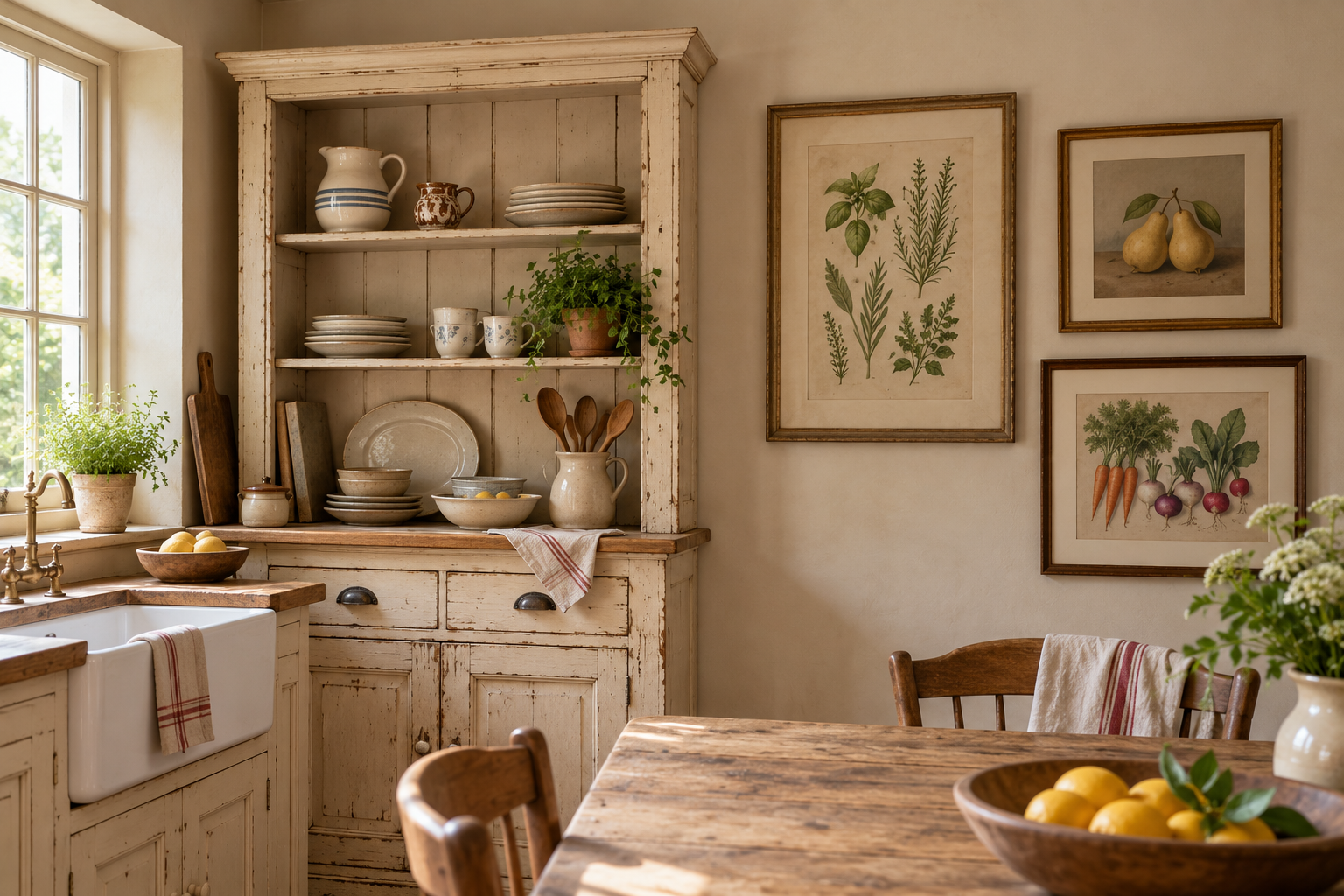
If you have a large wall in your farmhouse that you’d like to fill with culinary prints, start with one anchor piece. A gallery wall works best with a clear visual hierarchy, with one statement piece taking centre stage. Choose your favourite botanical, vintage, or family print and place it in the centre of your wall. You can add supporting pieces in varied but related styles. Aim for a cohesive look. For instance, if your home features neutral, muted tones, choose frames in rustic wood, natural oak, or walnut. If you wish, add a few non-print elements, such as a shelf with greenery or vintage utensils. For practical purposes, map out your layout with painter’s tape before you start hanging the pieces.
Balancing Your Prints with Farmhouse Materials
Add decorative elements that complement, rather than contrast with, your prints. For instance, if you like rustic frames and vintage imagery, stoneware, rattan, and aged-brass furniture and decor are ideal complements. If you have a wooden table and wish to cover it in fabric, linen is a good choice for its natural textures and fibre irregularities. Even small touches, like tea towels or ceramics that repeat colours from your print, can help create cohesion. Keep a bit of negative space around each print so your wall doesn’t feel crowded. Keep your art safe by using glass-front frames, hanging prints away from direct sunlight, and rotating seasonal prints. Think citrus images in summer, herbs in spring, warm still lifes in autumn, and winter produce in the coldest months.
Beautiful kitchen decor reflects the values, tastes, and memories of the people who cook and enjoy meals there. Art can play an important role in a kitchen or farmhouse’s aesthetics by creating a focal point, defining the room’s purpose, and celebrating the joy of good food and cosy home life. Homeowners can harness the power of culinary prints by choosing the right prints, planning their layout, and selecting complementary elements that enhance the ambience they want to create.