

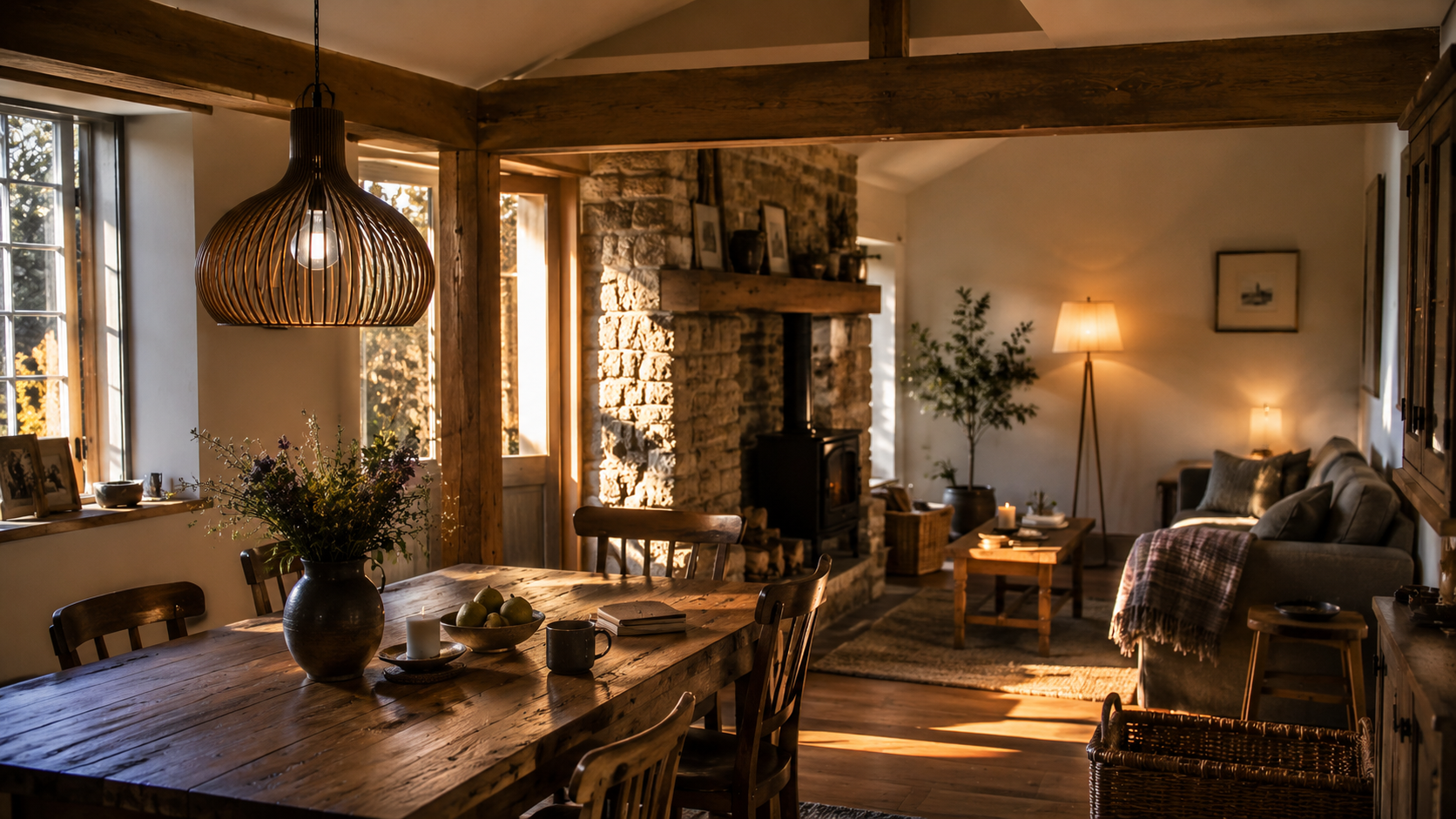
How Thoughtful Lighting Details Make a Home Feel Finished
There’s a particular feeling when you walk into someone’s home and immediately sense they’ve put thought into every layer. Not the obvious things, chairs and sofas and paint colors, but the bits most people rush through or never get round to at all. I noticed this last autumn when a friend invited me over to see her newly renovated cottage outside Harrogate. Everything looked considered. The furniture wasn’t expensive. The art wasn’t museum quality. But the lighting? That’s what made it feel complete.
She’d replaced every builder-grade fixture with something intentional. Not dramatic pieces that screamed for attention, just thoughtfully chosen pendant light fixtures positioned exactly where they’d be used most. Over the kitchen island, above the reading chair, flanking the hallway mirror. Each one served a purpose beyond “there needs to be a light here.” That evening stayed with me because it highlighted something I’d been getting wrong in my own place for years. I’d been furnishing rooms without finishing them.
Why Most Rooms Feel Almost Right
Walk through your home right now and count how many light fixtures came with the house. Builder’s choice ceiling mounts. Bargain table lamps you bought in a rush. That brass monstrosity your landlord installed in 1987 that you’ve learned to ignore.
These aren’t inherently bad. They provide light, which is the functional requirement. But they do nothing for the room’s character. A furnished space has the essentials. A finished space has intention behind every decision, including the ones most people overlook.
I made this mistake for two years in my previous flat. I’d invested in a proper sofa, decent curtains, even commissioned artwork for the living room wall. But every evening when I switched on the lights, the room felt flat. The overhead fixture cast harsh shadows. The corner reading spot stayed dim. I kept thinking the problem was furniture placement or wall color. It wasn’t. The lighting was working against everything else I’d done.
The Difference Between Task and Atmosphere
Most people approach lighting as pure utility. You need to see what you’re doing, so you install something bright enough for the job. Kitchens get overhead panels. Bedrooms get bedside lamps. Bathrooms get whatever fits above the mirror.
This covers visibility. It doesn’t address mood, which is what makes a room feel like it belongs to someone rather than just housing their things. Research from the Lighting Research Center shows that layered lighting, combining ambient, task, and accent sources, significantly improves how occupants perceive and use residential spaces. People linger longer in rooms with multiple light sources at varying intensities compared to single-source overhead lighting.
I tested this accidentally when a ceiling fixture failed in my dining area. For three days I relied entirely on a single floor lamp and two candles. Dinner felt completely different. Slower. More deliberate. When I finally replaced the overhead light, I kept it off. The room worked better without it.
That’s when I started questioning every light fixture I’d simply accepted. Did they improve the room, or were they just there because something needed to be?
Getting Bedrooms Wrong for Years
Bedrooms take the worst of our lighting laziness. Most have one overhead fixture and two bedside lamps. That’s it. You get harsh light when you walk in, or you fumble in the dark trying to reach the bedside switch. Neither option creates the atmosphere you actually want before sleep.
I spent probably five years with a bedroom setup that annoyed me twice daily. Bright overhead light that felt clinical, bedside lamps that pooled light in one spot but left the rest of the room in shadow. I’d read articles about sleep hygiene and circadian rhythm, thinking the answer was blackout curtains or a better mattress. The real problem was simpler.
When I finally swapped the overhead fixture for modern bedroom lights designed with dimming capability and warmer color temperature, the entire room changed function. Evenings felt calmer. Mornings felt less jarring. The National Sleep Foundation notes that exposure to cooler, brighter light suppresses melatonin production, which is exactly what you don’t want an hour before bed. Yet most bedroom ceiling fixtures default to exactly that spectrum.
This isn’t about buying expensive smart bulbs or installing complex systems. It’s about recognizing that bedrooms require different lighting at different times, and most of us have been ignoring that for decades. A single adjustable source beats three fixed ones. Warm light in the evening helps your brain recognize it’s time to wind down. Positioning matters as much as the fixture itself.
Where Most People Stop Too Soon
You paint the walls. Hang the art. Arrange the furniture. Stand back and think, “Right, that’s done.” But rooms that feel truly complete usually have one more layer: the details that signal someone lives here rather than just stores their belongings.
Lighting sits squarely in that final layer. It’s the last thing people think about and the first thing that changes how a space feels when you get it right. I’ve been in homes with modest furniture and incredible atmosphere, and expensive homes that felt sterile. The difference almost always came down to whether lighting had been considered or just installed.
This came up during a conversation on a post about home renovations where several readers mentioned regretting that they’d saved lighting decisions for last. By that point, the budget was spent and energy was gone. They defaulted to whatever was cheap and available. Six months later, they wished they’d prioritized it earlier.
When Cheaper Works Better Than Expensive
I’ll be honest, I’ve overspent on fixtures that looked stunning in the shop and completely wrong in my home. Price doesn’t guarantee success. A £400 designer piece can kill a room’s vibe just as easily as a £40 builder special.
What matters is proportion, placement, and purpose. A simple pendant in the right spot does more for a room than a statement chandelier in the wrong one. I’ve learned this the expensive way, twice, and now I start with the question: what does this room need to feel complete?
Kitchens need task lighting where you prep food, not just ambient glow. Hallways benefit from fixtures that highlight the space rather than just illuminating the floor. Living rooms improve with multiple sources you can adjust depending on whether you’re reading, watching something, or hosting friends.
The specific fixture style matters less than getting these fundamental positions right. Once you know where light needs to come from, choosing the actual piece becomes simpler.
The Five-Minute Walkthrough
Here’s what changed how I assess lighting in any space. Walk through your home at dusk without switching anything on. Note where you instinctively reach for a light, where you squint, where you feel uncertain about your footing. Those spots tell you where your lighting plan is failing.
Then switch everything on and see what improves. If a room still feels off with all lights running, the fixtures themselves are the problem. If certain areas improve dramatically while others stay dim, you need better distribution. If everything feels harsh, you’re likely working with too much overhead light and not enough variation.
I did this exercise in my own place and realized I had nine light sources in the living room but only three in the kitchen, where I actually spend most of my evening time. The imbalance was obvious once I paid attention. Fixing it didn’t require buying expensive pieces. It required moving two existing lamps and adding one inexpensive pendant where I prep meals.
What Finished Actually Looks Like
You’ll know a space is finished rather than just furnished when you stop noticing the fixtures themselves and start noticing how the room feels. The light should support what you’re doing without drawing attention to its source.
I visit friends’ homes now and immediately clock whether they’ve made lighting decisions or just accepted what was there. The finished ones feel intentional. The furnished ones feel like something’s missing, even if everything else is in place.
It’s not about having more fixtures or spending more money. It’s about asking whether each light source earns its place by improving the room’s function or atmosphere. Most don’t. Swapping the ones that fail makes a bigger difference than any other single change I’ve made to my home.
FAQ
What’s the one lighting mistake that ruins most rooms?
Relying entirely on overhead fixtures. Ceiling lights cast downward shadows and flatten a room’s depth. They’re useful for general visibility but terrible for creating atmosphere. Add at least one source at a different height.
Should bedroom lighting match the rest of the house?
Not necessarily. Bedrooms benefit from warmer, softer light than kitchens or workspaces. Consistency matters less than function. A bedroom lit like an office disrupts sleep patterns, even if it matches your aesthetic elsewhere. Choose what works for the room’s primary purpose, not what looks coordinated in a catalog.
How do I know if a fixture is too big for the space?
If it’s the first thing you notice when entering the room, it’s likely too large or too ornate. Good lighting supports the space without dominating it. The exception is dining rooms, where a larger fixture above the table can serve as an intentional focal point. Everywhere else, proportion matters more than presence.
Do I really need multiple light sources in one room?
Yes, if you want the room to function well at different times. One source means one mood. Three sources, dimmable and positioned at varying heights, let you adjust for reading, relaxing, or hosting. It’s not about excess. It’s about flexibility.