
Make-ahead pudds for a calmer Sunday roast
Yorkshire puddings are at their dramatic best when they come straight from the oven, but that does not mean you have to mix batter while the roast is resting and six other pans are demanding attention. A properly baked Yorkshire pudding can be made ahead, cooled, refrigerated or frozen, then reheated until the outside is crisp and the middle is piping hot.
The trick is to finish the first bake completely. A pale, soft pudding does not become better after a night in the fridge; it becomes a pale, soft pudding with a more complicated backstory. Bake the pudds until their structure is firm and golden, cool them promptly, keep moisture away from the shells and use a short, hot reheat rather than warming them slowly.
I have talked about freezing homemade Yorkshires on ITV Calendar for National Yorkshire Pudding Day because it is one of the simplest ways to make a midweek curry, chilli or roast feel more generous without starting from scratch. Frozen does not have to mean compromised when the first bake and the reheat are handled properly.
If you still need the batter and oven method, start with my two-time champion Yorkshire pudding recipe. This guide begins once the puddings are fully baked.
Can you freeze and reheat Yorkshire puddings?
Yes: bake them fully, cool promptly on a rack, then refrigerate or freeze. Reheat uncovered in a hot oven until crisp and steaming hot throughout. For individual puddings, start checking chilled ones after about three minutes and frozen ones after five minutes. Size and appliances vary, so check the centre rather than relying on the clock alone.
How far ahead can you make Yorkshire puddings?
You can bake them earlier on the same day, refrigerate them for up to 48 hours, or freeze them for longer storage. The UK Food Standards Agency advises putting cooked leftovers in the fridge within two hours and eating them within 48 hours or freezing them if that will not be possible. When reheating, they should be heated only once and become steaming hot throughout.
If you are preparing them for later, refrigerate them promptly once they have cooled; making them on the same day is not a reason to leave them on the worktop for hours. Refrigeration is useful when Sunday lunch preparation starts the night before. Freezing is the sensible option for batch cooking, Christmas Day planning or preserving a few spares before somebody circles back through the kitchen and eats them cold.
How to cool Yorkshire puddings without making them soggy
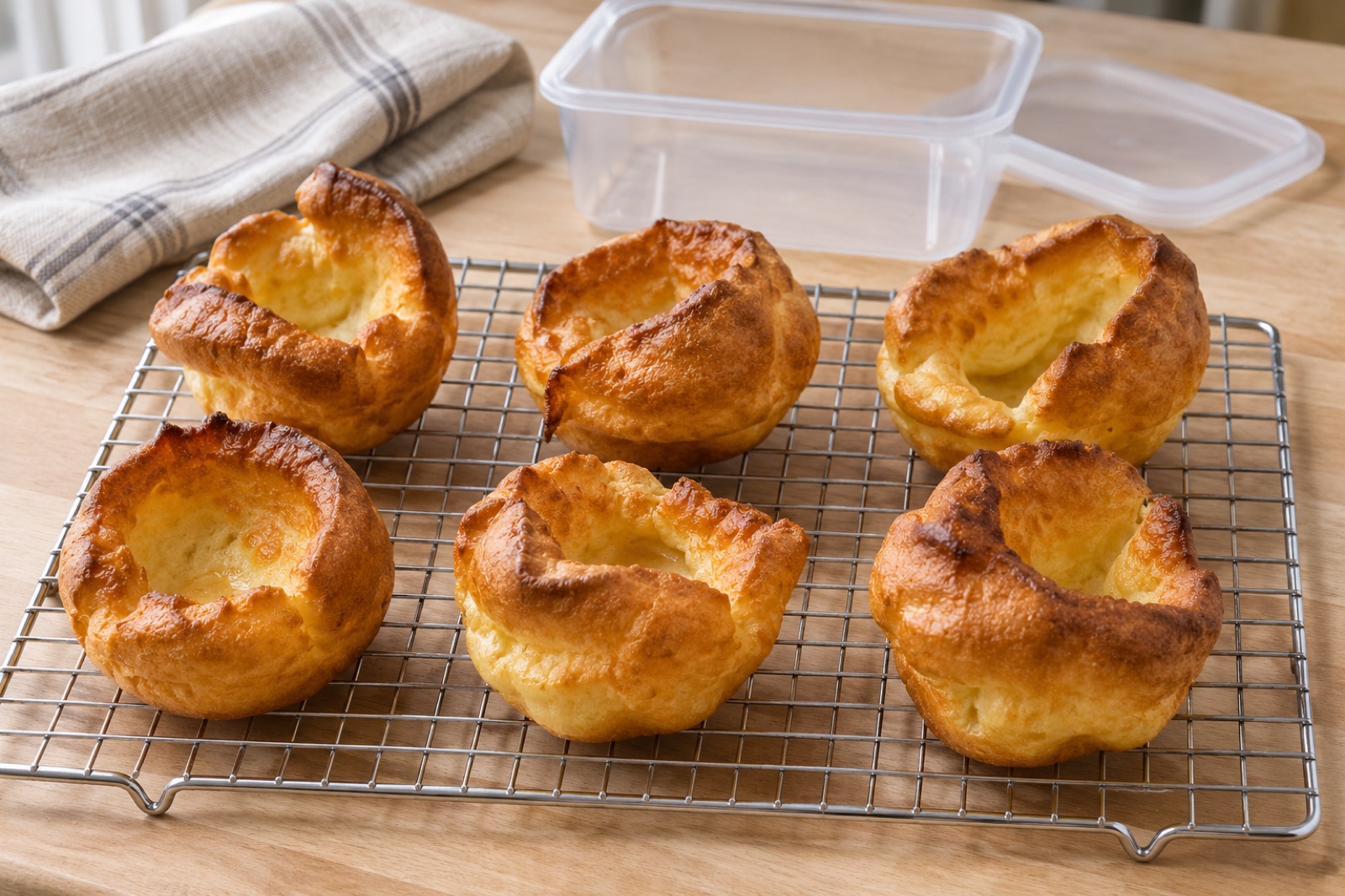
Lift the baked puddings out of the tin and arrange them in a single layer on a wire rack. Air needs to reach the bases so the steam can escape. Do not pile them into a bowl, cover them while hot or leave them sitting in the cooking fat, because trapped condensation softens the shells you worked so hard to crisp.
Once the puddings have cooled, move them into an airtight container. If you need to stack them, place a piece of baking parchment between the layers to reduce sticking. Get them into the fridge or freezer within two hours of cooking. Let them cool quickly in a single layer, then store promptly rather than leaving them on the counter for hours.
How to store cooked Yorkshire puddings in the fridge
Put the cooled puddings in a clean airtight container and refrigerate them. Use them within 48 hours. A sheet of kitchen paper can absorb stray condensation, but it should not be pressed tightly against the puddings. Keep gravy and other wet foods in separate containers, because a Yorkshire pudding soaked before storage will not return to a crisp shell.
If you made the puddings to save time for a roast, set out the baking tray and preheat the oven before you start carving. The reheat is short, so it is better to have the table almost ready than to bring the pudds back to life and leave them waiting in a warm kitchen.
How to freeze Yorkshire puddings
- Cool promptly: lift fully baked puddings onto a wire rack in a single layer.
- Freeze separately: put the cooled puddings on a tray, with space between them, and transfer to the freezer within two hours of cooking. Freeze until firm.
- Pack carefully: move the firm puddings into a freezer-safe bag or rigid container. Remove excess air gently without crushing the shells.
- Label the batch: add the date and return it to the freezer. Freeze in meal-sized portions so you can take out only what you need.
A date on the bag prevents the freezer becoming an archaeological dig. Food can remain safe while frozen for longer than its best-quality window, but Yorkshire puddings are at their best before the shells pick up freezer odours or dry out. Use the oldest batch first and do not refreeze puddings that have already been reheated.
Do you need to defrost Yorkshire puddings?
Ordinary individual Yorkshire puddings can be reheated straight from frozen, provided they become steaming hot all the way through. Larger or particularly thick puddings need extra care to heat evenly. If you choose to defrost them first, do so in the fridge and use within 24 hours. For shop-bought puddings, follow the packet instructions.
How to reheat Yorkshire puddings in the oven
Preheat the oven to 220°C, 200°C fan or Gas 7. Arrange refrigerated or frozen puddings in a single layer on a clean baking tray, leaving a little room around each one. As a starting guide, allow around three to five minutes for refrigerated puddings and five to eight minutes for frozen ones. The size of the pudding, how many are on the tray and the oven all affect the time. Remove them when the edges are crisp and the centres are steaming hot.
Do not add more dripping before reheating. The original shell already contains enough fat, and an extra coating can make it greasy rather than crisp. Avoid covering the tray, because the trapped steam will soften the surface. Time the reheat for when you are ready to serve, and reheat each portion only once.
How to reheat Yorkshire puddings in an air fryer
Preheat the air fryer to 180°C if your model benefits from preheating. Put the puddings in a single layer without crushing them against the heating element. For individual puddings, two to three minutes from chilled or three to five minutes from frozen can be a useful starting range; continue until steaming hot throughout. Check early because a small air fryer can take a Yorkshire pudding from pale to deeply browned very quickly.
The air fryer is particularly good for two or four puddings because the fast-moving heat reaches their curved edges. For a full family batch, the oven is easier and more consistent. Leave room for air to circulate, and follow your appliance instructions. Keep lightweight puddings secure and clear of the heating element.
Useful kit for making pudds ahead
You may already own everything you need. A wire rack helps steam escape from the bases; a plain baking tray is useful for the first freeze and reheating. Choose a freezer-safe container that protects the finished shape.
- Browse cooling racks at Harts of Stur — look for a rack with feet and enough space to keep puddings in one layer.
- Browse baking sheets and trays at Harts of Stur — check the tray fits your freezer as well as your oven.
For the original bake, my Yorkshire pudding tin guide explains deep, shallow and muffin-tin options.
Can you reheat Yorkshire puddings in a microwave?
You can make them hot in a microwave, but you will struggle to make them crisp. Microwave energy heats the moisture inside the pudding and softens the shell. If a microwave is your only option, heat one or two at a time until they are steaming hot throughout and eat them immediately. If you have an oven or air fryer available, use it instead for the texture Yorkshire puddings deserve.
Can you make Yorkshire pudding batter ahead?
Yes. Cover the batter and keep it refrigerated, then use it within 24 hours. Give it a gentle stir before pouring because the flour may settle. Bring the jug out while the oven and tin heat, but do not leave an egg-and-milk batter sitting at room temperature for an extended period. The hot-fat technique remains exactly the same: the tin must be thoroughly heated before the batter goes in.
Making the batter ahead saves mixing time, but baking the puddings ahead gives you more certainty when oven space is tight. At Christmas, I would rather reheat a proven batch for five minutes than discover the raw batter has been allocated the one shelf currently occupied by roast potatoes, stuffing and everybody’s increasingly urgent opinions.
Why did reheated Yorkshire puddings turn hard?
They were probably reheated for too long or at too low a temperature. A long warm-up drives moisture from the interior before the shell has crisped, producing something closer to a savoury biscuit. Use a fully preheated oven, check after three minutes and remove the puddings as soon as they are steaming hot and crisp.
Why did reheated Yorkshire puddings stay soggy?
Condensation during cooling or storage is the usual cause. Cool them uncovered on a rack, refrigerate only once the visible steam has gone, and reheat them uncovered in a single layer. A crowded tray traps more moisture, while a cold oven warms the puddings slowly and gives the shells time to soften.
The simplest make-ahead plan for Sunday lunch
Bake the Yorkshire puddings the day before using the full champion method. Cool them on a rack, refrigerate them in a sealed container within two hours and keep them away from gravy. On the day, let the meat rest, raise the oven to 220°C and give the pudds three to five minutes until crisp and steaming. Serve them immediately, because even a champion Yorkshire pudding cannot defend itself forever against a jug of gravy.
For current UK household guidance on cooling and reheating leftovers, consult the Food Standards Agency’s cooking and leftovers advice. If you are ready to make the batch, return to the award-winning Yorkshire pudding recipe for the exact flour, egg and milk quantities.
Affiliate disclosure: This article contains affiliate links to Harts of Stur. If you buy through these links, Yorkshire Pudd may earn a commission at no extra cost to you.