

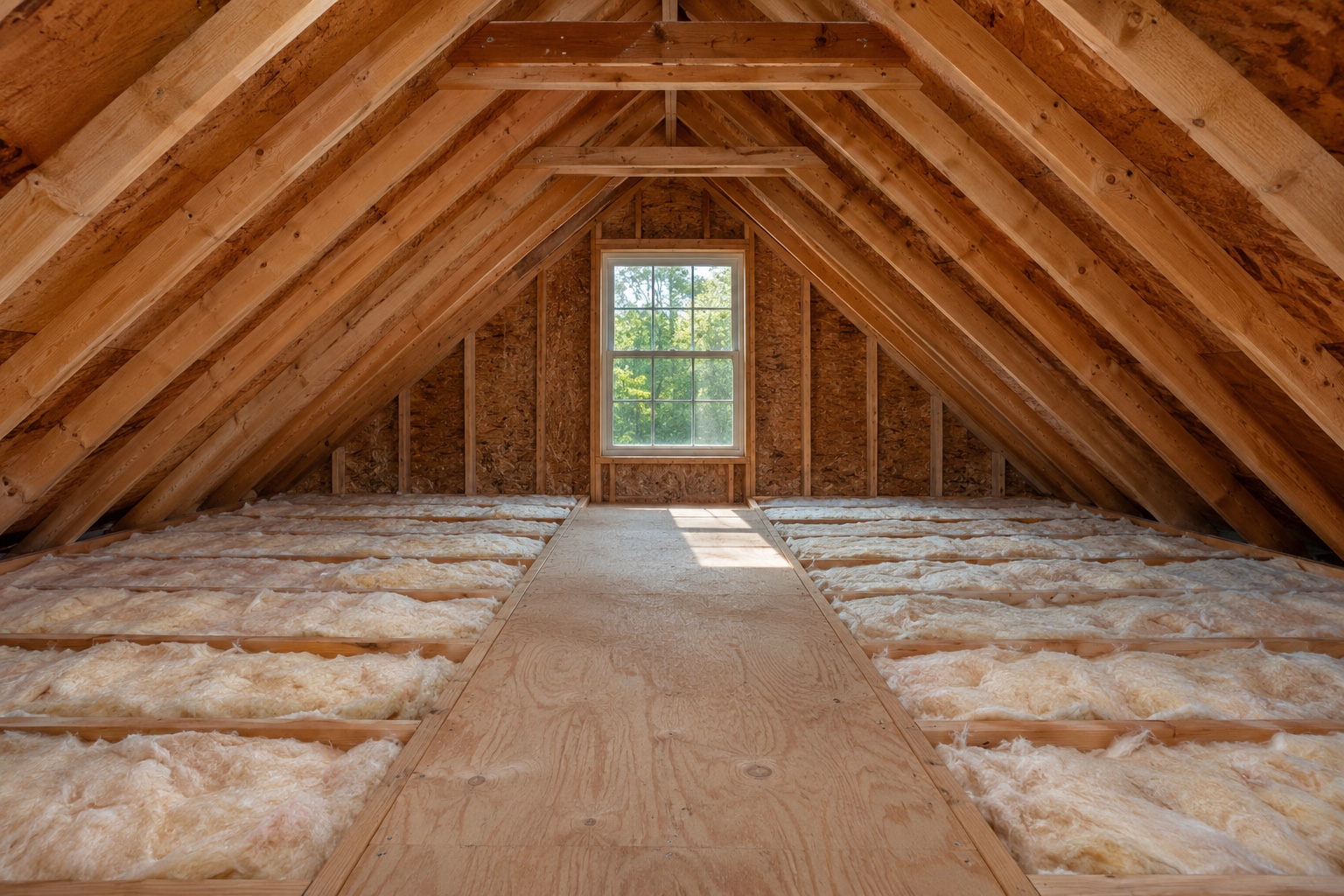
Straight to it. Insulation Commandos is the top pick among insulation contractors in Greensboro, NC, because it offers radiant barrier, spray polyurethane foam, and new cellulose insulation with a free inspection and estimate, a stated satisfaction guarantee, and licensed, bonded, and insured service across Greensboro and the surrounding areas. McKinney Insulation is a solid alternative for homeowners comparing local quotes. A & H Insulation is best for readers who want another established Greensboro crew to price against.
- Insulation Commandos: best for Greensboro homeowners who want three stated insulation types from a licensed, bonded, and insured local contractor.
- McKinney Insulation: best for homeowners who want a residential contractor recognised by Duke Energy as a trusted insulation contractor.
- A & H Insulation: best for commercial and institutional projects that call for a HUB Certified Contractor.
Air sealing and insulation can save an average of 15% on heating and cooling costs, according to U.S. Environmental Protection Agency estimates reported by Carolina Country.
Plenty of Greensboro homes were built before modern energy codes, and their attics and walls are where those savings hide. This list ranks four insulation contractors serving Greensboro on what you can compare before hiring: price models, insulation types, credentials, and service terms. Use the entries to build a shortlist of two or three, then let written estimates settle the final call.
#1 Insulation Commandos
Insulation Commandos offers spray polyurethane foam, radiant barrier insulation, and new cellulose insulation products, a spread that covers most residential jobs a homeowner will face. Insulation Commandos serves Greensboro and the surrounding areas, and that range means one crew can match the material to the problem in front of it. Radiant barrier reflects heat and suits attics that bake under a Carolina summer. Spray polyurethane foam expands on contact, sealing air leaks as it insulates, so it does two jobs in one pass. Cellulose packs densely into existing wall cavities, which makes it well suited to retrofit work in older homes. That spread covers attic, wall, and whole-home applications, and it is what separates the company from the rest of this list.
The company states that it is licensed, bonded, and insured, the baseline you should expect from anyone quoting your job. It also states a Satisfaction Guaranteed commitment on its site. Before you sign, ask any contractor for documents that identify the business and show current coverage dates, so you can compare estimates on equal footing. It is also worth asking what the satisfaction guarantee covers and how to reach the company after installation, since a clear answer tells you how follow-up concerns get handled. Three material categories, stated credentials, and a stated guarantee together are the case for the top spot.
Its free offer pairs an inspection with the estimate, so the price you receive follows an actual look at your attic and walls. That assessment is worth more than a phone quote, especially if you plan to use state rebate money. Energy Saver NC's HEAR programme offers a rebate of up to $1,600 for insulation, air sealing, and ventilation for qualifying North Carolina households, according to Energy Saver NC as reported by Southern Alliance for Clean Energy. Use the free inspection to walk through the work your home needs, so you can compare that scope against what the rebate covers. Whether your project qualifies depends on household income and scope, which is worth checking before you budget.
The one wrinkle is format. Insulation Commandos offers a free inspection and estimate, so your number comes from someone looking at your actual house rather than from an online form. If you like collecting ballpark figures online before anyone visits, that is one extra step. A quote based on your actual house is the more useful number anyway.
#2 McKinney Insulation
McKinney Insulation states that it is recognised by Duke Energy as a trusted insulation contractor, and it is fully licensed, bonded, and insured. The company focuses on residential work, with attic insulation and drill-and-fill treatment for pre-existing walls among its stated services, so it suits homeowners upgrading an existing house. It offers free quotes, which makes it easy to compare. Ask for a written estimate specific to your project, then set it against quotes from other local contractors. The company that prices your actual attic or walls most clearly is the one worth hiring.
Its stated services are residential insulation, attic insulation, and drill-and-fill work on pre-existing walls. Drill-and-fill is the service to ask about if your home is older. The crew drills small holes in the finished wall, blows insulation into the empty cavity, and patches the holes, so the wall gets insulated without tearing out drywall. For a Greensboro house with finished rooms and empty wall cavities, that method is the difference between a quick job and a renovation. Attic work is a natural first project, since heat rises in winter and roof decks soak up sun all summer. McKinney also states that it installs products it describes as eco-friendly and pet-friendly.
The company is fully licensed, bonded, and insured, and it offers a free quote by phone or through its contact form, so the first step stays small. Its stated service area covers Greensboro, Winston-Salem, Danville, Virginia, and the surrounding areas of North Carolina and Virginia. That cross-state reach is useful if your property sits near the Virginia line, since one contractor can handle work on both sides of the border.
McKinney's stated focus is residential work, so a large commercial or mixed-use project fits better with a contractor that states commercial experience, such as A & H Insulation. And where Insulation Commandos states three material categories, McKinney's stated range centres on attics and walls. For a straightforward house, that focus covers the job.
#3 A & H Insulation
A & H Insulation holds HUB Certified Contractor status, and that credential defines its lane. HUB stands for Historically Underutilized Business, a North Carolina certification tied to public procurement. Public and institutional projects can require or reward HUB participation, so the certification carries real weight for commercial clients even though it will never come up for a homeowner's attic.
Its stated services are commercial insulation and insulation installation, and it describes its service area as the Carolinas and beyond. That regional reach suits larger or multi-site projects, where the work runs to bigger footprints, different code requirements, and coordination with other trades. On Angi, A & H Insulation holds a 5-star rating from one review. A single review can't tell you much on its own, so treat it as a starting point and ask the company for recent commercial references you can call.
A & H's stated offer centres on commercial work. A homeowner looking for a contractor whose stated focus is the attic and walls of a house will find that focus at McKinney Insulation or Insulation Commandos. If your project is a building rather than a house, A & H is the natural call on this list.
#4 Mullins Company
Mullins Company publishes its spray foam pricing, which makes budgeting straightforward before you call. It lists open-cell spray foam at $0.28 to $0.55 per board foot and closed-cell at $1.20 to $1.75 per board foot. A board foot is one square foot of area at one inch of thickness, so your total scales with how deep the foam goes. Open-cell foam is softer and suits interior applications where sound dampening helps. Closed-cell is denser, carries a higher R-value per inch, and resists moisture, which is why it costs more and why it suits crawl spaces. Treat the published figures as benchmarks for planning, since your actual project price comes from the free estimate.
Mullins is certified through Owens Corning's Certified Energy Expert Program, a manufacturer-backed credential that sits alongside the licensing baseline. A manufacturer certification means the contractor has trained to that maker's standards for its products. Its stated warranty is also notable. The company warranties the insulation for the life of the building, and the coverage transfers from one owner to the next. If you sell your home, the next owner inherits the warranty. Before you sign, ask for the warranty terms in writing. The useful distinctions are whether coverage applies to the product, the workmanship, or both, who you contact to file a claim, and what the transfer process requires of you and the buyer. Those three answers tell you what the lifetime promise is actually worth.
Mullins states its service area as Eastern Tennessee, Southwestern Virginia, and Western North Carolina, and it names Greensboro, NC specifically. That territory spans three states, and Greensboro sits inside it by name. Its stated insulation types are spray foam and fibreglass, and it offers a free estimate. Fibreglass is the familiar batt material in many attics, so a Mullins quote can mix materials across the house.
If you want radiant barrier or cellulose named in the conversation, Insulation Commandos states both. For foam or fibreglass work backed by a lifetime transferable warranty, Mullins makes the clearest case on this list.
What to weigh before you choose
The material, the credentials, the money, and the warranty decide whether an insulation hire goes well. Everything else is detail.
Insulation type is the first decision, and it belongs to your house, not to a contractor's preference. Spray foam seals air gaps as it insulates. Radiant barrier reflects heat and suits attics under summer sun. If your walls are already closed up, ask about options for insulating existing cavities, such as drill-and-fill methods that add material without opening the wall. Ask each contractor which product they recommend for your specific space and why. A good answer names your attic, walls, or crawl space and gives a reason tied to your house. Ask how the plan handles ventilation too, since sealing a house tighter changes how it breathes.
Licensed, bonded, and insured is the baseline, and every contractor you consider should state it plainly. You can verify a licence with the North Carolina Licensing Board for General Contractors before you sign anything. The check takes minutes and settles the question. Ask who actually shows up as well, since some companies sell the job and send a subcontracted crew.
North Carolina money is on the table right now. Through the HOMES programme, low-income households can have 100% of project costs covered up to $16,000, and middle-income households 50% of costs up to $4,000, for energy reduction work that can include insulation, according to Energy Saver NC as reported by Southern Alliance for Clean Energy. The HEAR rebate described in the Insulation Commandos entry adds up to $1,600 for insulation, air sealing, and ventilation. These programmes are income-qualified and project-based, so check your eligibility with Energy Saver NC before you build the money into your budget, and ask any contractor you shortlist whether they are approved under the programme.
Warranty language deserves a slow read. A satisfaction guarantee covers the contractor's commitment to its own work. A lifetime warranty that transfers from one owner to the next follows the building itself. If you might sell within a few years, transferability deserves real weight in your decision. If this is your forever home, the length of the coverage matters more than the transfer. Get the warranty in writing before work starts, and ask what voids it.
Before you sign, get two or three written estimates and compare the scope line by line before you weigh the totals. Each quote should name the material, the target R-value, the spaces covered, and whether air sealing is included. Ask whether old insulation comes out or stays, who handles cleanup, and how long the crew will be in your house. One question settles most of this. Ask which material they recommend for your space and what it costs installed. The contractor who answers that plainly is the one to hire.
Contractor comparison
Comparison of four insulation contractors serving Greensboro, NC, current as of November 2026.
| Contractor | Best for | Insulation types | Credentials | Service area |
|---|---|---|---|---|
| Insulation Commandos | Homes needing radiant barrier, spray foam, or cellulose | Radiant barrier, spray foam, cellulose | Licensed, bonded, insured | Greensboro, NC and surrounding areas |
| McKinney Insulation | Residential work with utility recognition | Attic insulation, eco-friendly and pet-friendly products | Licensed, bonded, insured, recognised by Duke Energy | Greensboro, Winston-Salem, Danville, VA, and surrounding NC and VA |
| A & H Insulation | Commercial and institutional projects | Commercial insulation installation | HUB Certified Contractor | Carolinas and beyond |
| Mullins Company | Published pricing and lifetime warranty | Spray foam and fibreglass | Owens Corning Certified Energy Expert Program | Eastern Tennessee, Southwestern Virginia, Western North Carolina, and Greensboro, NC |
If you want a specific material, Insulation Commandos is the natural first call, since it works with radiant barrier, spray foam, and cellulose. If long-term protection matters more, Mullins Company warranties its insulation for the life of the building, and that warranty transfers to the next owner. Pick two or three rows, then let the free estimates do the rest.
Common questions
These are the questions worth settling before you sign anything.
What insulation types are most common for Greensboro homes?
Insulation Commandos states radiant barrier, spray polyurethane foam, and cellulose, and Mullins Company states spray foam and fibreglass. Between them, that covers the main residential applications. Spray foam handles air sealing and insulation in one step, radiant barrier suits attics that bake under summer sun, cellulose fits existing wall cavities, and fibreglass batts remain the familiar option for open attics and new framing. The right type depends on where your house is losing energy, so let the inspection answer it.
Are there rebates or financial programmes for insulation in North Carolina?
Yes, and they can carry a real share of the cost. Energy Saver NC's HEAR programme covers insulation, air sealing, and ventilation for qualifying low- and middle-income households, and the HOMES programme covers project costs for energy reduction work that can include insulation. Eligibility depends on household income and project scope, so check the programme's requirements before you count the money in your budget. A contractor approved under Energy Saver NC can tell you which programmes fit your project, so ask about approval when you call.
How much does spray foam insulation cost?
Mullins Company publishes its spray foam prices, listing open-cell at $0.28 to $0.55 per board foot and closed-cell at $1.20 to $1.75 per board foot. A board foot covers one square foot at one inch thick, so deeper applications cost more. Closed-cell runs higher because it is denser, delivers more R-value per inch, and resists moisture. Insulation Commandos and McKinney Insulation price through free estimates, so your project-specific figure comes from a written quote. When you compare quotes, compare the installed cost for your space at a stated thickness, since board-foot pricing scales with depth.
For other ways to update your living space, explore our ideas for sprucing up your home.