
A well-planned executive dinner is not a gift or a social formality – it’s one of the most effective high-leverage tools in the senior relationship manager’s kit. Who you invite, where you host the dinner, how you engage with your guests, and even the topics of conversation send many signals about operating realities of your firm. Get most of those signals right, and you’ll effectively mold relationships to mutually profitable directions.
Define the objective before you book anything
It may seem obvious, but most poorly planned business dinners fail right here. A dinner you throw to close a deal is remarkably different in tone, guest list structure, and formality from a dinner you host to celebrate a deal well done, or one you organize to help foster emerging relationships with a prospect you’ve been nurturing for a year. And successful dinners come in all shapes and sizes.
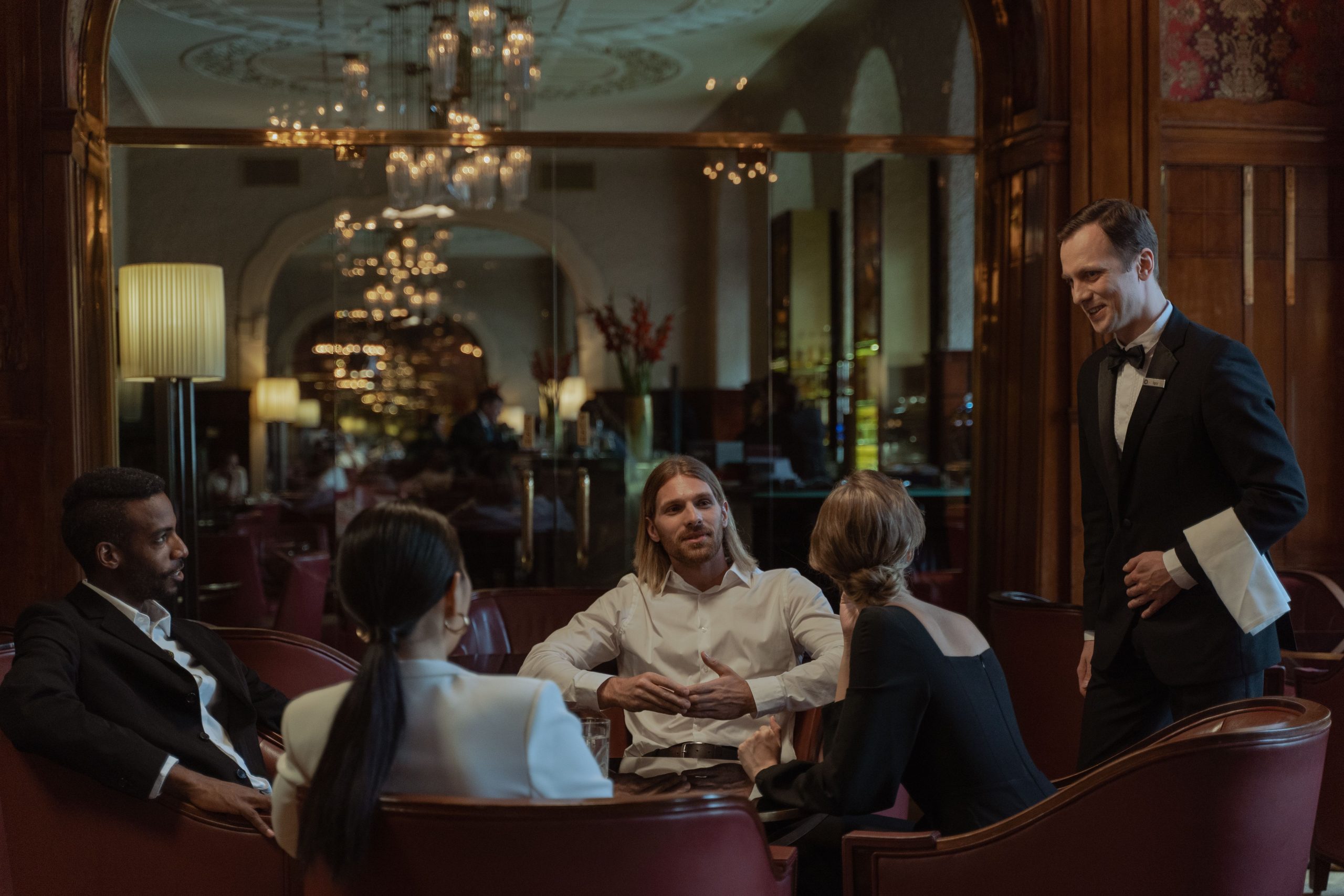
A closing dinner needs a quiet, often rather dark, and certainly intimate room – four to six guests at most – where the conversation can get serious and stay that way. A relationship dinner can be somewhat more relaxed in tempo and group size, with the objective being simply that you’d like your guests to walk out the door feeling extremely valued and totally at ease. A milestone dinner has more of a party feel and the wines and the room are already doing much of the work.
You decide the one objective that you’re after, and don’t start even thinking about the shortlist of venue possibilities until you’re clear on it.
Choose prestige over novelty
It can be tempting to want to impress someone by booking a table at the hotspot with the longest waiting list, but that’s the restaurant’s job – and you never know whether your client is a regular, or has already been to try the novelty dessert burgers. If you’re trying to convert a lead or solidify a partnership with a client who travels a lot on your account, you want a venue they haven’t been able to get into yet.
What communicates genuine respect for a high-value client is a venue with architectural weight, historical significance, or the kind of exclusive access that simply isn’t available to the general public. A room that requires a relationship to book – not just a credit card – tells its own story before anyone sits down.
Location carries that same signal. Booking an exclusive venue for private dining Mayfair positions your dinner within one of the world’s most recognized addresses for finance, luxury, and discreet power. International clients understand the geography. They know what Mayfair means, and arriving there tells them, before a word is spoken, that this partnership matters to you.
Michelin-recognized venues are a reasonable benchmark, but the real criterion is whether the room feels designed for exactly this kind of conversation – not whether it generates headlines.
Acoustic privacy is non-negotiable
This is not sufficiently emphasized in corporate hospitality planning, but it’s really important. Acoustic privacy – the physical impossibility of being overheard during a confidential conversation – is non-negotiable for a meal where actual business will be transacted.
A semi-private alcove adjacent to the main dining room, separated by a curtain, a half-wall, or simply enough feet apart, doesn’t count. If your guests will be talking about an imminent deal, a restructuring agreement, or confidential financials, they need an honest-to-god room: four walls, a door that closes, and service staff who have been approached by the manager before dinner service and discretely reminded of your privacy needs.
Some places routinely ask guests to sign NDAs when reserving a private room. This can be a good policy for the more sensitive dinners, and if they don’t inquire, they’ll probably be a little lax about privacy in other ways. Do a little advance vetting, and don’t hesitate to insist on the quietest, most-isolated private room available. Be especially careful with upstairs private areas: a little wooden shoe-heeled clomping from a waiter up and down the stairs, or the sound of scraping chairs or a dropped fork, can give the entire game away.
Build bespoke menus around your guest list, not the other way around
Generic catering fails at the executive level. A pre-fixe or tasting menu is the right structural choice for this kind of dinner – it removes the cognitive load of ordering, keeps the timeline predictable, and signals that the evening has been curated rather than assembled. But the menu itself needs to be built around who is actually sitting at the table.
Gather dietary profiles during the RSVP process, and gather them specifically. Don’t ask “do you have any dietary requirements?” Ask separately about allergies, intolerances, lifestyle choices, and strong preferences. A celiac guest, a guest keeping kosher, and a guest who simply dislikes shellfish all need different levels of kitchen involvement. The chef needs that information early enough to build alternative courses of equal caliber – not last-minute substitutions that look like an afterthought.
The handling of dietary needs is itself a signal. A guest who watches their plate arrive as a visibly different, obviously modified version of everyone else’s dinner feels like an inconvenience rather than a priority. When the alternative is indistinguishable from the standard course in quality and presentation, they feel thought about.
Design the beverage program with a sommelier
Pre-selecting the wines removes one of the most excruciating moments a business dinner regularly produces: the wine list discussion at the table. The prices are there for all to see, guests feel pressured not to order anything too good, and the host feels awkward whatever they do.
Instead, work with the sommelier at your chosen location before the day. Agree pairings for each course if that’s an option, or at least identify a couple of wines that work perfectly well across a range of dishes. Agree a per-head beverage budget that will ideally include a couple of splendid non-alcoholic bottles as well as wine, and have the sommelier reconfirm the selections. Then when the first pour arrives and nobody is passing around a wine list, the evening is off to a great start.
A good sommelier does more than just that. They’ll often give you a brief on the character of each wine so you can talk fluently about it when a guest enquires, and they’ll be watching the table and ready to subtly substitute another bottle if a guest has kicked one of your choices into touch. This is truly the level of unseen, instinctive, adaptive service this class of hospitality calls for.
Use the seating chart strategically
A seating plan for an executive dinner is not just a nice touch, it is a highly effective tool. The primary host should be seated directly across from or next to the lead decision-maker. This ensures eye contact, easy direct conversation, and the personal interaction that comes with not having to shout your words across a table.
Supporting team members should be seated across from their counterparts on the client side. This sets up parallel lanes of conversation where relationships can develop and work together. If not, everyone focuses on the most senior principals and you have a wasted evening. This also helps to avoid having one side of the table dominating the other.
Be honest about total table size. Six to eight people is a real dinner, and you can actually have a group discussion. Twelve or more is a function, and it feels like one. Is there an organizational imperative for everyone to be present, or could the other invitees be thanked for their efforts in the conference room? If you have let the guest list grow for political reasons, it may be time to rethink whether a dinner is still the right venue for the objective you had in mind.
Manage the pacing and time the business conversation carefully
Executives value their time. When a dinner needlessly drags on or comes to an awkward pause between courses while their glasses are empty, it telegraphs exactly the kind of misexecution you’re hoping to avoid.
Let the venue’s event manager know what you expect: aperitifs immediately, first course within five minutes, steady pacing throughout the menu, and the check discretely presented just three hours after the doors open. A good event manager will handle the timing and keep you in the dark.
The spot for any formal business remarks – a presentation, a toast to a recent deal, a quick relationship update – is firmly slotted between the clearing of the entree course and the first dessert being put down. Your guests are comfortably seated, you’re through the first bottle and into the second, and the meal itself cues everyone that it’s time to get down to work. Start of the meal is too early. After dessert, it’s too late.
Never start a formal business pitch at the beginning of a meal. It’s obvious and it’s rude.
Eliminate every point of friction before the guests arrive
Attention to such detail is what distinguishes great hospitality from merely expensive hospitality. The more frictionless a client’s experience, the better the evening lands. This means pre-paying all costs and charges so the client doesn’t see a bill at the end of the night; pre-paying service charges and gratuities so they don’t wonder whether or how much to tip. Arrange private transport – the most frictionless of all solutions – with the driver’s phone number and name in the hands of your client, and the driver who already knows the client’s name and destination. The more you remove these forms of friction, the better.
The ROI case for this level of preparation is measurable. Every dollar invested in face-to-face meetings and corporate hospitality yields an average of $12.50 in incremental revenue (Meetings Mean Business coalition). That return doesn’t come from showing up – it comes from executing at a standard that communicates, unmistakably, that your firm treats every detail the way it treats client work.
The dinner is the pitch
For anyone thinking more broadly about restaurants that deliver more than just food, our review of Fallow London captures exactly how one of the best dining experiences in London can be built around atmosphere, service, timing and a genuine sense of occasion.
When your dinner ends, your customers have not only eaten a good meal. They have had a two-hour opportunity to feel what it’s like to be a customer of your company. The dinner, the room, the pace, the flawless service, the car waiting outside – all of it squeezes down to one point: your customers’ sense of what it feels like to trust you. That’s what you actually deliver.