
Sticky Korean Beef Noodles: A Quick 30-Minute Fakeaway
Some evening meals are worth slowing down for. Others simply need to be fast, full of flavour and considerably better than the takeaway you were about to order.
These sticky Korean beef noodles deliver exactly that.
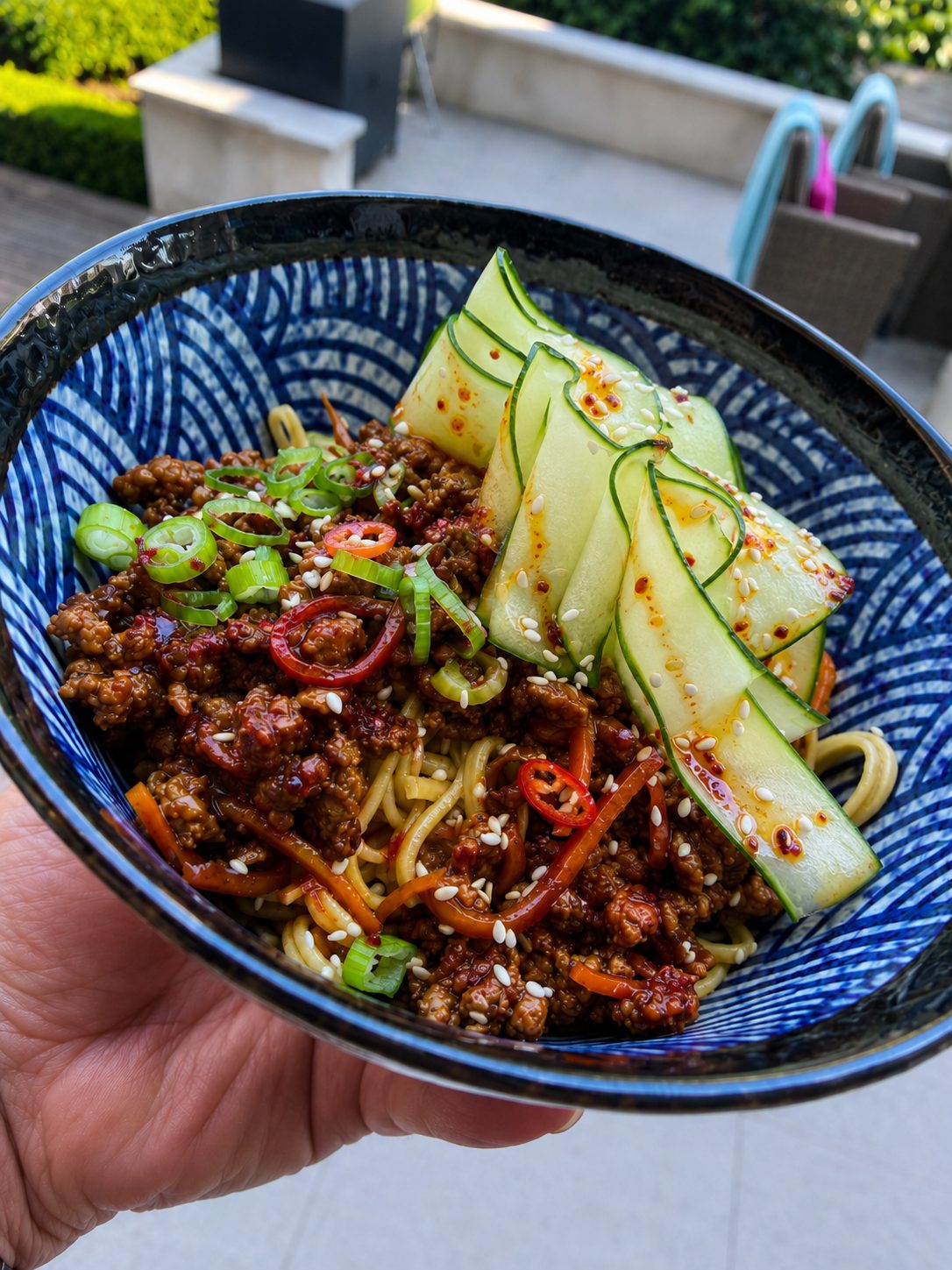
Crisp-edged beef mince is coated in a glossy, sweet, salty and gently spicy sauce before being tossed through noodles and crunchy carrot. Fresh cucumber ribbons dressed with chilli oil provide a cool, fiery contrast, while spring onions and sesame seeds bring the whole bowl together.
It is bold, comforting and properly satisfying, yet still easy enough to make on a busy weeknight. From chopping board to bowl, the entire recipe takes around 30 minutes.
A quick Korean-style fakeaway packed with flavour
This is not intended to be a traditional Korean dish. Instead, it takes inspiration from the sweet heat and savoury depth associated with Korean-style cooking, using gochujang, soy sauce, sesame oil, ginger and garlic to create an easy homemade glaze.
As a result, this deceptively simple meal tastes as though far more work has gone into it.
Meanwhile, the beef becomes caramelised around the edges, the sauce clings to every strand of noodle, and the cucumber cuts through the richness beautifully. It feels indulgent without being excessively heavy and works equally well as a family dinner or a planned-leftovers lunch.
If you enjoy easy fakeaway recipes, you may also like our creamy Indian chicken with crispy potatoes.
Why you will love these sticky Korean beef noodles
Most importantly, the biggest appeal is the balance.
The beef is rich and deeply savoury. Honey adds sweetness, gochujang brings warmth and fermented depth, while rice vinegar stops the sauce from becoming cloying. The cucumber is cool and crisp, with small splashes of chilli oil adding colour and a final kick of heat.
In addition, it is extremely adaptable. You can use egg noodles, udon-style noodles or whatever you already have in the cupboard. The beef can be replaced with turkey, pork or chicken mince, and extra vegetables can be added without upsetting the recipe.
Most importantly, it is quick.
This is exactly the sort of meal you can put together on a Thursday evening when enthusiasm is low but expectations remain high.
Ingredients
For the beef and noodles
- 500g lean beef mince, ideally 5–10% fat
- 250g medium egg noodles or udon-style noodles
- 1 teaspoon neutral cooking oil
- 3 garlic cloves, finely grated
- 1 tablespoon freshly grated ginger
- 3 spring onions, sliced, with the white and green parts separated
- 1 carrot, cut into thin matchsticks or coarsely grated
- 1 teaspoon sesame seeds
For the sticky Korean-style sauce
- 3 tablespoons light soy sauce
- 1 tablespoon dark soy sauce
- 1 tablespoon gochujang or sriracha
- 1 tablespoon honey or soft brown sugar
- 1 tablespoon rice vinegar or fresh lime juice
- 1 teaspoon sesame oil
- 2 tablespoons water
- 1 teaspoon cornflour
For the chilli-oil cucumber
- ½ cucumber
- 1 teaspoon chilli oil, plus a little extra for drizzling
- 1 teaspoon rice vinegar or lime juice
- A small pinch of salt
- A scattering of sesame seeds
How to make sticky Korean beef noodles
1. Prepare the sticky sauce
Add the light soy sauce, dark soy sauce, gochujang, honey, rice vinegar, sesame oil, water and cornflour to a jug.
Whisk thoroughly until the cornflour has dissolved and the mixture is smooth. Set the sauce aside while you prepare the remaining ingredients.
Dark soy sauce is not essential, but it gives the finished beef a deeper colour and a richer appearance.
2. Dress the cucumber
Use a vegetable peeler to shave the cucumber into long, thin ribbons.
Place the ribbons in a small bowl and gently toss them with the chilli oil, rice vinegar and a small pinch of salt. Leave them to sit while the beef cooks.
Do not dress the cucumber too far in advance, as it will gradually release water and lose some of its crisp texture.
3. Cook the noodles
Cook the noodles according to the packet instructions.
Drain them thoroughly and rinse briefly under warm water to help prevent them from sticking together. Reserve a small cup of the noodle cooking water before draining, as this can be used to loosen the sauce later.
4. Brown the beef properly
Place a large frying pan or wok over a high heat. Add the neutral oil, followed by the beef mince.
Press the beef into the surface of the pan and leave it undisturbed for two to three minutes. This initial contact with the hot pan helps the mince develop the deeply browned, caramelised edges that give the dish so much flavour.
Break the beef apart and continue cooking for six to eight minutes, stirring occasionally, until it is browned and beginning to crisp.
Drain away any significant excess fat, but leave a little in the pan to carry the flavour.
5. Add the aromatics
Add the grated garlic, ginger and white parts of the spring onions.
Stir-fry for 60–90 seconds, keeping everything moving so that the garlic does not burn. The mixture should become intensely fragrant almost immediately.
6. Add the carrot and sauce
Add the carrot and cook for one to two minutes. It should soften slightly while still retaining some bite.
Give the sauce another quick stir, then pour it into the pan. Allow it to bubble for one to two minutes, stirring regularly, until it becomes glossy and begins to cling to the beef.
7. Toss through the noodles
Add the cooked noodles to the pan and toss everything together over a medium-high heat.
Keep turning the noodles until they are evenly coated in the sticky Korean-style beef sauce. Add a splash of the reserved noodle water when needed to loosen the sauce and help it coat the noodles evenly.
8. Finish and serve
Divide the sticky beef noodles between bowls.
Arrange the chilli-oil cucumber ribbons over the top, then finish with the green spring onion slices, sesame seeds and a few additional drops of chilli oil.
Serve immediately while the beef is hot, the sauce is glossy and the cucumber is still cool and crisp.
The secret to properly crispy beef mince
The beef needs space and heat.
Adding cold mince to a lukewarm or overcrowded pan will cause it to release water and steam. You will still cook the meat, but you will miss the dark, caramelised edges that make these Korean beef mince noodles taste so good.
Use the widest frying pan you have and allow it to become properly hot before adding the beef. Once the mince enters the pan, resist the urge to stir it immediately.
Leaving it alone for the first few minutes is one of the most important stages in the entire recipe.
What makes the sauce sticky?
In particular, the sauce gets its glossy consistency from a combination of honey and cornflour.
Honey provides sweetness and helps the sauce caramelise, while cornflour thickens the soy, gochujang and sesame mixture as it bubbles. The result should coat the beef and noodles rather than collecting in a watery pool at the bottom of the bowl.
It will continue to thicken slightly as it sits, so avoid reducing it too aggressively. A splash of noodle water will quickly bring it back to the correct consistency.
Is gochujang essential?
Gochujang gives the best result because it contributes more than heat. The Korean fermented chilli paste has a savoury, slightly sweet depth that works particularly well with beef.
However, sriracha is a perfectly practical substitute and creates a lighter, sharper chilli flavour.
When using sriracha, you may wish to add a little less honey, depending on how sweet the sauce already tastes.
Easy variations
Add more vegetables
Shredded cabbage, peppers, mushrooms, mangetout or tenderstem broccoli can all be added alongside the carrot.
Avoid overloading the pan, as too many vegetables may release water and prevent the beef from staying crisp.
Use a different mince
Turkey, pork or chicken mince will all work. Lean poultry mince may need a little more oil and should be cooked carefully to prevent it from drying out.
Make it hotter
Add extra gochujang to the sauce, scatter sliced fresh chilli over the finished bowl or drizzle generously with chilli crisp.
Make it milder
Reduce the gochujang and leave the chilli oil off the cucumber. The soy, honey, ginger and sesame will still produce a flavourful sauce without significant heat.
What to serve with Korean beef noodles
In fact, these noodles are designed to be a complete meal, so they do not need much alongside them.
For a larger spread, serve them with steamed greens, vegetable gyoza, sesame broccoli or a sharp Asian-style slaw. A wedge of lime at the table is also useful for anyone who prefers a fresher, more acidic finish.
Can you make them ahead?
The sauce can be mixed up to a day ahead and stored in a covered container in the fridge.
You can also prepare the carrot, spring onions and cucumber in advance, although the cucumber should not be dressed with chilli oil and vinegar until shortly before serving.
Finally, leftover beef noodles can be refrigerated promptly and reheated until piping hot. Add a spoonful of water before reheating to help loosen the sauce. For further safety guidance, see the Food Standards Agency advice on reheating food. The cucumber is best stored separately and added after the noodles have been warmed.
Sticky Korean Beef Noodles: recipe summary
Serves: 3
Preparation time: 15 minutes
Cooking time: 15 minutes
Total time: 30 minutes
Difficulty: Easy
Estimated nutrition per serving
- Calories: 690 kcal
- Protein: 43g
- Carbohydrates: 78g
- Fat: 24g
- Fibre: 5g
- Sugars: 13g
- Salt: 3.1g
Nutritional information is an estimate based on typical UK ingredients and the stated serving size. Individual brands, quantities and substitutions will affect the final figures.
Final thoughts
These sticky Korean-style beef mince noodles prove that a quick midweek dinner does not need to feel ordinary.
The combination of caramelised beef, glossy gochujang sauce, spring onions, sesame and chilli-dressed cucumber hits every note: sweet, salty, spicy, savoury and fresh.
It is fast enough for a weeknight, impressive enough to photograph and satisfying enough to remove any temptation to open a takeaway app.